
Taste Sangiovese on Waiheke: Small Group Tours from $350 NZD

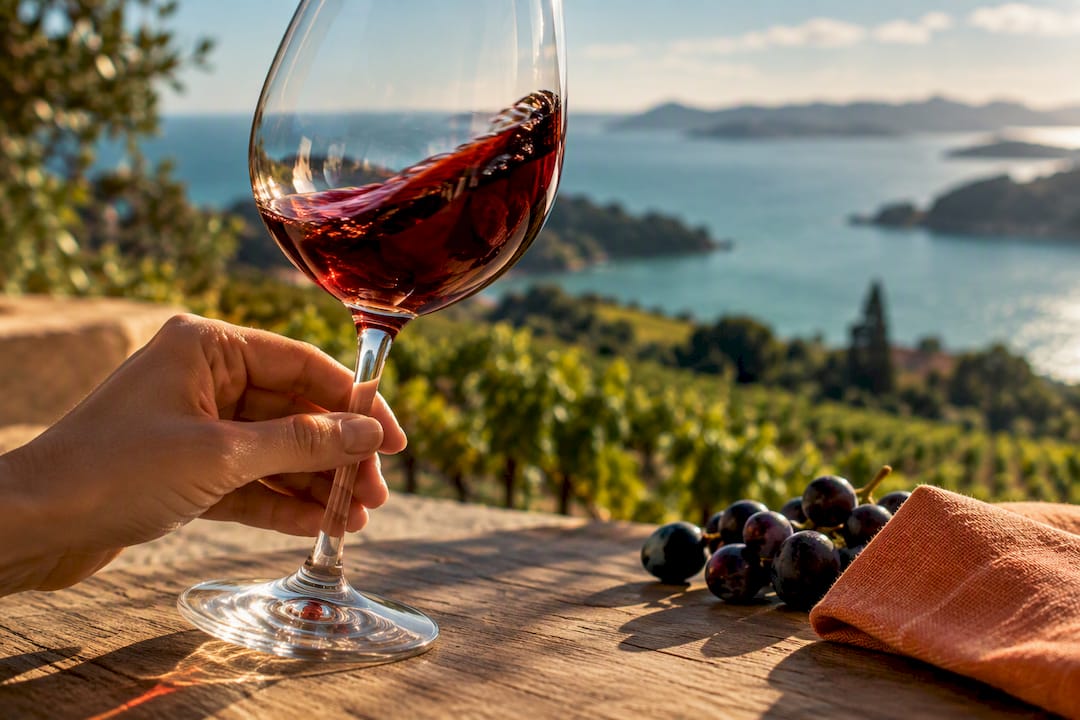
Yes, Sangiovese is grown on Waiheke, though it remains a niche pour compared with the island’s signature Bordeaux-style reds and Syrah. A handful of boutique producers have planted or bottled the variety in small volumes, so tasting it usually means checking cellar-door lists before you go or joining a guided tour that already knows which vineyards have a bottle open that week.
TL;DR:
Most Waiheke wineries produce small batches of Sangiovese, so it is rarely part of standard tasting flights and often requires prior inquiry.
The island’s warm, sheltered climate helps ripen Sangiovese fully, but careful vineyard management is needed to preserve acidity and avoid excessive ripeness.
Expect Sangiovese from Waiheke to feature red cherry and raspberry flavors, with herbal or spicy notes and tannin levels varying with vintage and oak use.
Guided small-group tours are the best way to reliably taste Sangiovese, as they coordinate winery visits and often include food pairings suited to the variety.
Sangiovese on Waiheke exemplifies winemakers’ efforts to explore New Zealand’s terroir beyond Bordeaux and Syrah, making each bottle a potential discovery.
Table of Contents
Is Sangiovese Actually Grown on Waiheke?
Waiheke built its reputation on Bordeaux-blend reds and Syrah, the two styles that made the island’s name in the 1980s and 1990s. But growers here have never stuck to a single script. Over the past two decades, several producers have planted Italian varieties, including Sangiovese and Montepulciano, treating them as a way to test how the island’s warmth and drainage handle grapes bred for a different Mediterranean coastline.
That experimentation is why Sangiovese shows up in regional coverage of Waiheke wine, even though it sits well behind Cabernet Sauvignon, Merlot, and Syrah in total plantings. It is not a marketing gimmick. Waiheke’s growing conditions genuinely resemble parts of central Italy closely enough that a curious winemaker would want to try.
A few names worth knowing if you are tracking down the variety or its Italian cousins:
Man O’ War — a large, family-owned estate on the island’s eastern end, known for coastal vineyard blocks and a working cellar door where staff can tell you what is currently poured, including any Italian-variety releases. Man O’ War’s scale and site diversity make it one of the more likely places to find something outside the standard Bordeaux lineup, and the estate maintains a cellar-door experience worth checking before you visit.
Te Motu — an Onetangi Valley producer that leans into estate-grown, low-yield fruit and pairs its tastings with cellar-door dining, an approach Te Motu has built its reputation around.
Other island producers worth a phone call if you are specifically hunting Sangiovese, since small-batch releases move on and off tasting lists without much notice.
Waiheke also carries formal weight as a place name, not just a marketing label. It is listed as a registered geographical indication with IPONZ, which means any wine labeled “Waiheke Island” has to actually come from grapes grown there. That matters for provenance claims on a bottle of estate Sangiovese just as much as it does for the more famous reds.
Where to Taste Sangiovese on Waiheke
Finding Sangiovese on Waiheke takes a bit more legwork than ordering the house Syrah, but the island’s cellar-door culture makes it manageable if you know where to point your car (or your tour van).
Man O’ War for the widest range of tasting flights and the best odds of an off-menu Italian-variety pour if one is currently bottled.
Te Motu for a slower, seated tasting paired with lunch, ideal if you want to sit with a glass rather than rush through a flight.
Mudbrick for a well-known cellar door with reliable weekend hours, worth asking about any limited-release reds beyond the standard list.
Batch Winery for a more casual, food-forward setting where staff are used to fielding questions about smaller-production wines.
Casita Miro for a Spanish-and-Mediterranean-leaning atmosphere that pairs naturally with the conversation about Italian varietals, even when Sangiovese itself is not the headline pour.
When you arrive, ask directly for single-varietal Sangiovese or vineyard-vintage bottlings rather than assuming it is on the standard tasting flight. Cellar-door staff on Waiheke are used to swapping in extras for guests who ask specific questions.
Multi-stop operators such as Fullers360’s Taste of Waiheke combine ferry travel, coach transport, and tastings across several of these wineries in one day, which solves the logistics problem for visitors without a rental car. Ferry timing matters more than people expect. Sailings from downtown Auckland run on a fixed schedule, and missing the return leg on a Friday or Saturday evening can turn a relaxed afternoon into a stressful scramble. Because Sangiovese releases are small and seasonal, call ahead or check a winery’s tasting notes online before you commit a whole afternoon to chasing one specific bottle.
Why Waiheke’s Climate Shapes a Different Sangiovese
Waiheke’s Māori name, Te Motu Arai ROA, translates to “the island of long shelter,” a reference to the sheltered, warm mesoclimate that makes the island noticeably warmer and drier than mainland Auckland. That shelter, combined with well-draining clay and volcanic loam soils, pushes red grapes toward riper fruit character than you would get in a cooler, wetter site.
For Sangiovese, a grape that in Tuscany is prized for its bright acidity and firm tannin, that warmth is a double-edged sword. Ripeness comes easily on Waiheke. Retaining the grape’s naturally high acid and savory edge takes deliberate work in the vineyard and the cellar.
Growers often manage yields and canopy cover carefully, thinning leaves and fruit to keep sugar accumulation from outpacing the acid a good Sangiovese needs.
Winemakers choose oak regimens and extraction levels that decide whether the finished wine leans toward a lighter, brighter Tuscan-style red or a fuller, riper New World interpretation.
Blending decisions, whether the wine is bottled as a single varietal or folded into a red blend, further shape the final character.
Pro Tip: Ask your cellar-door host whether the Sangiovese you’re tasting was made in a “restrained” or “ripe” style. The answer tells you more about what to expect in the glass than the vintage year does.
Vintage variation plays a real role here too. A cooler, wetter year on Waiheke can push a Sangiovese closer to its classic Tuscan profile, while a hot, dry season tends to produce something rounder and more fruit forward than you’d find outside New Zealand.
What Waiheke Sangiovese Tastes Like and What to Eat With It
Expect red cherry and raspberry fruit up front, often layered with a dried-herb or dusty spice note that is a Sangiovese signature wherever it is grown. Depending on ripeness and oak treatment, the tannin can run from fine and grippy to noticeably softer and fuller than a classic Chianti.
Common descriptors to listen for on a tasting sheet or from a cellar-door host:
Bright red cherry and raspberry, sometimes with a tart edge
Dried herb, dusty spice, or a faint savory note
Fine to medium tannin, occasionally softer in warmer vintages
A brisk, food-friendly acidity even in riper examples
Pair it the way Tuscans would: tomato-based pasta, grilled lamb, or a charcuterie board cut the wine’s acidity and let the fruit shine. Kiwi lamb, in particular, works well with Waiheke’s riper style, and it is easy to find on menus at cellar-door restaurants across the island. If you are building your own pairing at home before a tour, a dish like Tuscan chicken pasta bake hits the same notes: rich, herby, and tomato-forward.
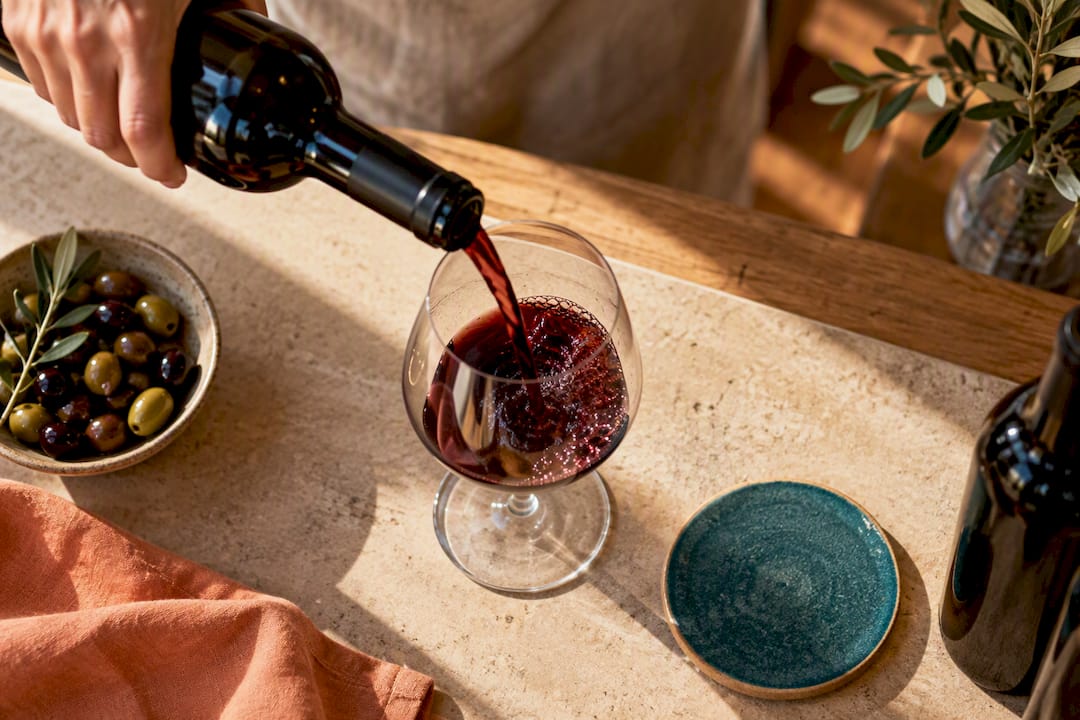
If you are tasting several reds in one sitting, serve Sangiovese slightly cooler than room temperature, in a standard red wine glass, and taste it before heavier, more tannic Bordeaux blends so your palate isn’t already fatigued.
How to Plan a Sangiovese Tasting Visit on Waiheke
Finding a specific, small-production variety like Sangiovese works best with some local knowledge, since not every cellar door pours it every weekend. A guided, small-group tasting solves that problem by doing the legwork of checking what is currently open before you arrive.
A host who already knows which cellar doors have Sangiovese on the list that week saves you from guessing.
Small groups get more one-on-one time with pouring staff, which means better odds of a special or off-list pour.
Pairing a tasting with a proper lunch stop turns a wine stop into a full afternoon rather than a rushed flight.
Pro Tip: If Sangiovese is specifically what you’re after, mention it when you book. A guide who knows in advance can build the day’s stops around wineries most likely to have it open.
Booking ahead matters most on weekends and through summer, when ferry and tasting schedules fill up fast. Ask about current Sangiovese releases before you travel, since small-batch wines can sell out or rotate off a tasting list with little warning.
Why Sangiovese Is Worth Watching on Waiheke
Sangiovese is not going to replace Syrah as Waiheke’s calling card, and it shouldn’t try to. What it represents is more interesting: island winemakers using a warm, sheltered mesoclimate to test how far New Zealand terroir can stretch beyond the Bordeaux playbook. Small-batch releases mean every bottle you find is closer to a discovery than a routine order. Watch how these wines shift from vintage to vintage. That’s where the real story is.
— Luca
Book a Small-Group Tasting Built Around Waiheke’s Rarer Reds
Chasing down a specific bottle of island Sangiovese on your own means calling ahead, hoping a cellar door has it open, and building your own itinerary around ferry timetables. A local wine tour operator does that legwork for you, running small-group tours capped at six guests so your host can adjust the day’s stops around what is actually being poured, rather than sticking to a fixed script built for a coach full of strangers.
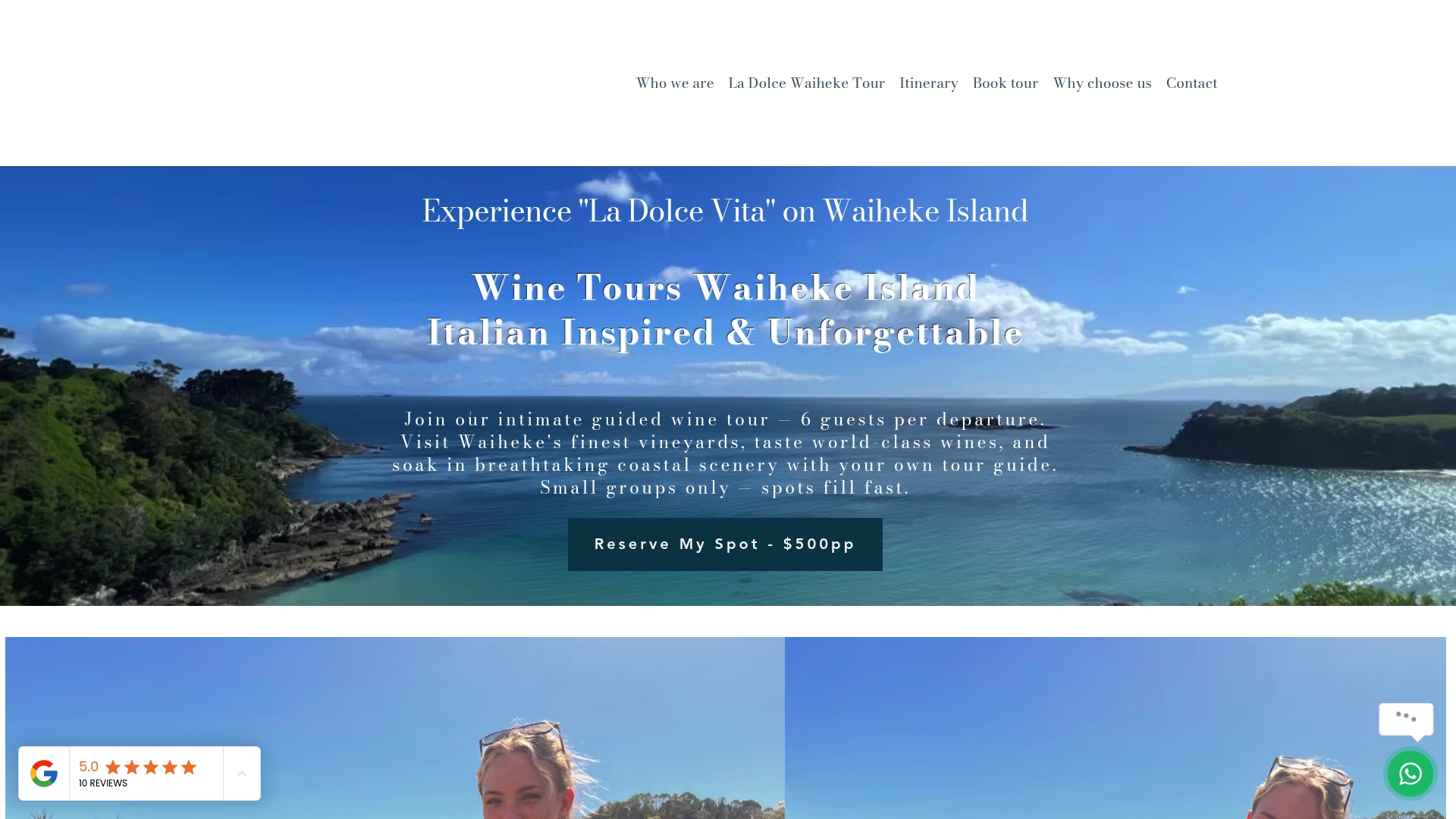
A Sangiovese-focused day typically means a stop at a boutique vineyard known for experimenting with Italian varieties, a paired lunch or gourmet tasting to match the wine’s food-friendly acidity, and time to actually talk with your host about what makes that bottle different from the island’s usual Bordeaux blends. It suits couples, small groups of friends, and food-and-wine focused travelers who would rather spend the afternoon tasting slowly than rushing through a checklist. The La Dolce Waiheke Tour runs at $350 NZD per person, and for a more elevated version with Michelin-level food pairing, the Michelin Star Waiheke Experience is $650 NZD per person. Check current availability and book your tasting before weekend slots fill.
Sources
FAQ
What wine is Waiheke famous for?
Waiheke is best known for Bordeaux-style red blends and Syrah, styles that built the island’s international reputation starting in the 1980s. Sangiovese and other Italian varieties exist as a smaller, more experimental part of the mix, found at select cellar doors rather than across the whole island.
Who owns Man O’ War vineyard?
Man O’ War is a family-owned estate on Waiheke’s eastern end, known for its coastal vineyard sites and cellar-door restaurant. It remains one of the island’s larger and better-known producers, with a visitor experience built around tastings and dining.
What does Waiheke mean in Māori?
Waiheke’s fuller Māori name, Te Motu Arai Roa, translates to “the island of long shelter,” a reference to the sheltered, warm mesoclimate that helps ripen red grapes reliably each season.
What famous people live on Waiheke?
Waiheke has long attracted a mix of artists, musicians, and business figures drawn to its beaches and boutique wine scene, though specific current residents are not publicly confirmed in any consistent way. The island’s reputation as a retreat close to Auckland is part of what has shaped its wine tourism industry.
How do I taste Sangiovese on Waiheke without missing out?
Call ahead or check tasting notes online before visiting, since Sangiovese is produced in small volumes and rotates on and off cellar-door lists. Booking a guided tour, such as Theitalianonwaiheke’s small-group experiences, lets a local host confirm availability and build the day around wineries most likely to have it open.
Recommended
Comments