
Spot Beach, Cliff and Valley Wineries on Waiheke, Book Small Group Tours


The fastest way to see Waiheke’s best coastal winery scenery is a curated small-group tour that handles the ferry, transfers, and reservations while you focus on the Red Rock views and Verde Valley wine experience. If you’d rather self-guide, pair one true beachfront cellar door with one elevated valley vineyard, book both ahead, and budget extra driving time between them. Either path beats winging it on a peak-season weekend.
TL;DR:
Beachfront wineries with sand access are rare, with only Man O’ War offering direct beachside tasting rooms; most “coastal” wineries are elevated or cliffside.
Booking a private or small-group tour ensures reliable ferry timing, better access, and more meaningful conversations with winemakers than independent DIY plans.
Allow at least 30 minutes of buffer time between stops to account for delays, especially during peak season when winery schedules and traffic can cause delays.
Reserving tastings two weeks ahead is recommended for weekends between December and April when demand is high; midweek bookings are generally less crowded.
The eastern, remote end of Waiheke has fewer accessible coastal wineries and longer transfers, so prioritize logistics if beach access is your top scenery goal.
Table of Contents
What “Scenic Coastal” Actually Means at Waiheke Wineries
Waiheke gets marketed as one big coastal wine region, but the scenery splits into three distinct experiences, and knowing which one you’re booking changes everything about how the day feels.
Beachfront cellar doors sit right at the water’s edge, where you can walk from your tasting glass to the sand in under a minute. Elevated valley vineyards climb the hillsides above Onetangi and other inland pockets, trading direct beach access for sweeping views down toward the coastline. Coastal-cliff vineyard pockets occupy the middle ground: not on the beach, but close enough to the shoreline that you get open water views without a wharf underneath you.
Here’s the part most visitors don’t realize until they’ve already booked the wrong stop:
Beachfront cellar doors with genuine sand-to-glass access are rare on the island.
Elevated valley wineries, concentrated around Onetangi, are far more common and offer some of the widest vineyard-to-sea panoramas.
Coastal-cliff sites tend to cluster toward the island’s eastern and southern edges, where the terrain gets rougher and the crowds thin out.
Waiheke’s western corridor, anchored around Onetangi, holds the bulk of the well-known wineries and the easiest logistics. The eastern end is a different animal entirely: more remote, more rugged, and worth the extra travel time if beachfront scenery is the priority.
Statistic callout: Man O’ War, at the island’s eastern tip, is the only cellar door situated directly at a sandy bay, with tasting room and restaurant access right on Man O’ War Bay. Everything else billed as “coastal” on Waiheke is technically an elevated or cliffside vineyard with sea views, not a beach.
That distinction matters when you’re picking a tour. A lot of guides and tourism pages use “coastal” loosely, and visitors show up expecting sand underfoot when what they’re actually getting is a hillside terrace with a horizon view. Both are genuinely scenic. They’re just not the same thing, and Tantalus Estate in Onetangi Valley is a good example of the elevated style done well, with vineyard rows falling away toward the water in the distance rather than a beach at your feet.

Getting to Waiheke and Between Coastal Wineries
The ferry from downtown Auckland takes about 40 minutes and runs frequently through the day, landing at Matiatia Wharf on the island’s western side. From there, your options split into public transport, taxis, rental cars, or a private guided transfer, and each one changes your day dramatically.
Public buses connect Matiatia to the main wine areas but run on limited schedules, especially outside peak tourist hours, so they’re workable for a single stop but risky if you’re trying to hit two or three wineries in a day.
Taxis and ride shares exist on the island but are thin on the ground, and wait times can eat into tasting time you didn’t plan to lose.
Rental cars give you the most flexibility for a self-guided day, but many wineries have limited parking during peak season, and driving after a full tasting flight isn’t something anyone should be doing anyway.
Private or guided transport, including small-group tours, removes the guesswork entirely by handling ferry timing, winery bookings, and the driving in between.
Booking timing matters more than most first-time visitors expect. Local wine industry guidance recommends reserving tastings well ahead for weekends between December and April, when both ferries and wineries fill up fast. Midweek visits outside that window tend to mean shorter waits and more relaxed conversations with the people actually pouring your wine.
Time budgets vary a lot depending on which scenic type you’re visiting. A beachfront stop at somewhere like Man O’ War often means a longer overall transfer, since it sits at the island’s remote eastern end, so factor in extra driving time if it’s part of a mixed-scenery day. An elevated valley estate near Onetangi is a much shorter hop from the ferry terminal.
Pro Tip: Book your ferry return time before you book your last winery tasting, not after. Missing the last sailing of the day is the single most common planning mistake on Waiheke, and it turns a great afternoon into a stressful scramble at the wharf.
If you want the specific crossing schedule laid out in full, this ferry planning guide breaks down timetables and transfer options in more detail.
Beachside or Elevated? How to Pick the Right Winery
Neither scenic style beats the other. It comes down to what you actually want out of the afternoon, and a few honest questions will sort it out fast.
Start with your scenery priority. If you want to put your feet in the sand between tastings, you’re narrowing your list to the handful of properties with genuine beach access, and you need to accept the longer transfer that usually comes with it. If a wide vineyard panorama with the coastline in the distance is enough, the elevated valley wineries around Onetangi give you far more choice and much easier logistics.
Next, think about food. A long, lazy lunch calls for a winery with a proper restaurant attached, not just a tasting counter. Some of the best coastal views come with the best kitchens, but not all of them, so check the dining format before you commit a whole afternoon to one stop.
Ask these questions before you book anything:
What’s the tasting format: a seated flight, a guided walk-through, or a quick counter pour?
What’s the cancellation policy if the weather turns or the ferry schedule shifts?
Is there a group size cap, and does that match how many people you’re traveling with?
Is parking guaranteed, or does the property rely on overflow lots during busy months?
For beachfront properties, is there boat access, and does that change arrival logistics?
If winemaker access matters to you, small-group formats almost always win here. Large hop-on hop-off circuits move fast and rarely leave room for real conversation with the person who actually made the wine. A guided small-group tour, or a self-guided visit booked directly with a boutique cellar door, gives you far better odds of an actual conversation instead of a scripted pour.
Mobility and access needs should decide this earlier than most people plan for. Elevated vineyards often mean uneven terrain and steps between the car park and the tasting room, while beachfront sites can involve sand or gravel paths that aren’t wheelchair-friendly. Call ahead if this affects your group.
A Sample Scenic Coastal Day on Waiheke
Here’s how a well-paced day actually plays out when you’re mixing beachfront and elevated scenery without rushing.
8:15 AM — Catch an early ferry from downtown Auckland, landing at Matiatia around 9:00 AM. Early departures beat the crowds and give you first pick of tasting slots.
9:30 AM — First stop: an elevated valley vineyard near Onetangi for a seated tasting flight. Budget 60 to 75 minutes for a proper guided tasting rather than a rushed counter pour, based on typical winery visit timing.
11:15 AM — Transfer toward the island’s coast for a beachfront cellar door and a long lunch. Allow 90 to 120 minutes here, including a short walk on the sand.
2:00 PM — Buffer time for the transfer back west, since eastern beachfront sites can add 30 to 45 minutes of driving compared to a straightforward Onetangi loop.
3:30 PM — Late-afternoon stop at a second elevated vineyard for sunset-leaning views over vines and water.
5:30 PM — Head back to Matiatia with enough buffer to make your return ferry without sprinting for it.
Pro Tip: Pack layers regardless of the forecast. Waiheke’s coastal breeze can turn a warm morning into a chilly wharf wait by evening, and elevated vineyard terraces are noticeably windier than sheltered beach coves.
Build in at least a 30 minute buffer between every stop. Wineries run behind schedule constantly during peak season, and a tight itinerary with zero slack turns one late tasting into a missed ferry.

Why a Curated Small-Group Tour Beats DIY on Waiheke’s Coast
Most of the friction in planning a scenic Waiheke day isn’t the wine. It’s the logistics: transfer times, parking limits, and figuring out which “coastal” listing is actually a beach and which one is a hillside with a view. Boutique, small-group formats tend to solve this by design, since operators with fewer guests per group can secure better access and pacing than a bus rotating through forty people on a fixed schedule.
A local guide also changes the texture of the day. Instead of a recorded script at each stop, you get real context about why a particular valley produces the wines it does, and often an easier path to actually meeting the person who made them. That’s the gap between a tour and an experience, and it’s the piece self-guided trips usually miss.
— Luca
Book a Curated Coastal Wine Tour With The Italian On Waiheke
The Italian on Waiheke exists for exactly the reader who doesn’t want to gamble a whole day on ferry timetables and parking lots. Groups are kept small to allow for real conversation and unhurried access, not a queue behind a tour bus.
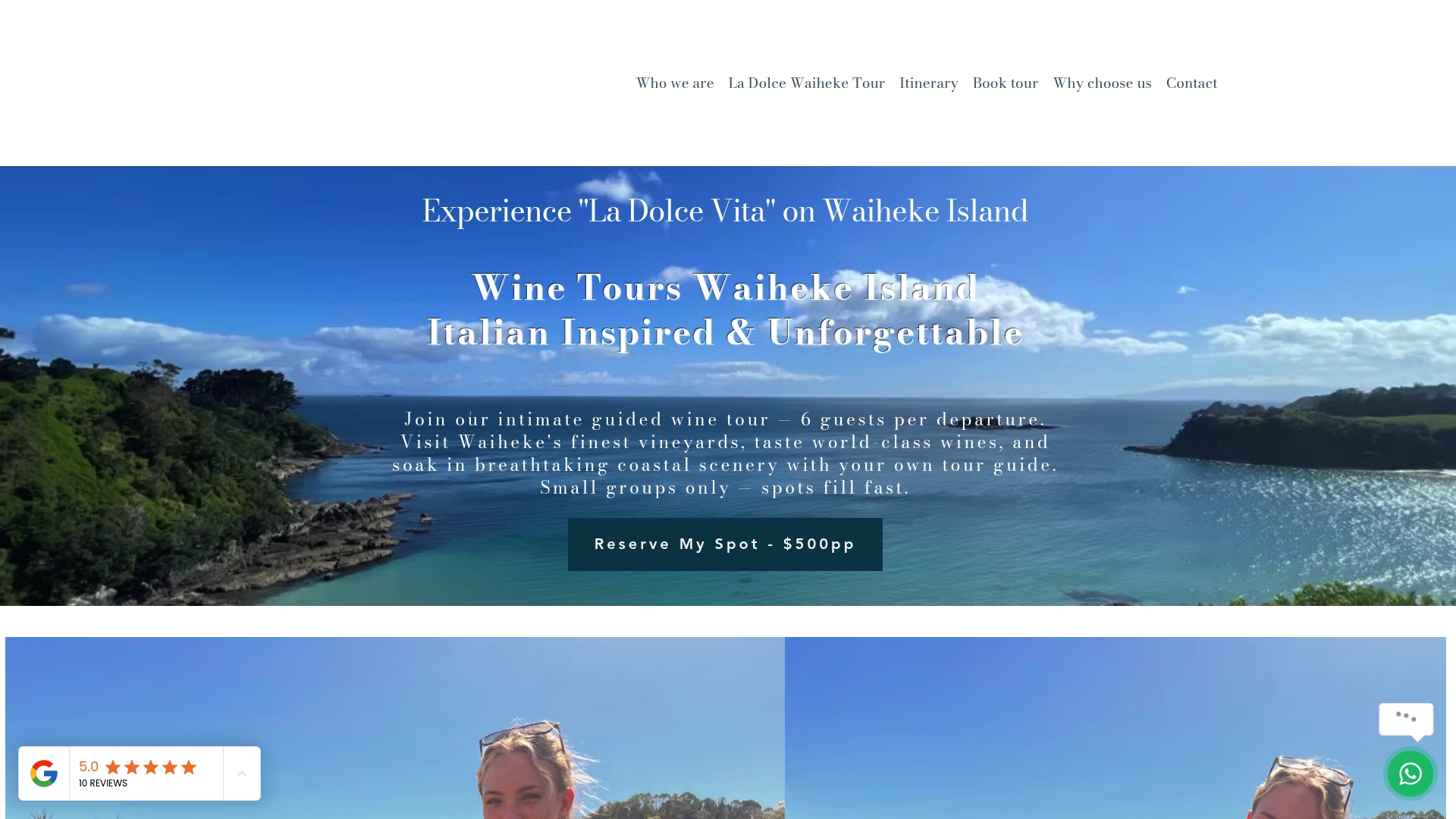
Three ways to book, depending on what kind of day you want:
La Dolce Waiheke Tour covers a curated run through boutique coastal vineyards with gourmet dining built in.
Michelin Star Waiheke Experience pairs elevated and beachfront wine stops with an elevated dining component for a full-day indulgence.
Private Tour is built for groups who want the itinerary shaped entirely around their own scenery and pacing preferences.
Every option includes the transfers, so you skip the ferry math and the parking search entirely. During the December to April peak, slots fill quickly on weekends, so book a week or two out if you can. Head to the booking page to lock in a date, or check current availability and pricing before you commit to a specific weekend.
Where to Verify Waiheke Winery Details
For hours, current tasting menus, and event calendars, check winery pages directly rather than relying on secondhand listings. The Waiheke Wine Growers Association maintains a full member directory for the island’s cellar doors, and ferry operator sites carry the most current crossing schedules, which shift seasonally.
Sources
FAQ
What’s the Best Winery on Waiheke Island?
There’s no single “best” since it depends on whether you want beachfront scenery or elevated valley views. For true beach access, Man O’ War’s tasting room sits directly on Man O’ War Bay, while Onetangi Valley properties like Tantalus Estate deliver the wide vineyard-and-sea panoramas most people picture when they imagine “coastal Waiheke.”
Where Is Sam Neill’s Vineyard in New Zealand?
Sam Neill’s Two Paddocks vineyard is located in Central Otago on New Zealand’s South Island, not on Waiheke. Waiheke’s wine scene is entirely separate, sitting in the Hauraki Gulf near Auckland and known for its own distinct coastal terroir.
What Are Some Ideas for a Day Trip to Waiheke Island?
A well-paced day trip mixes one elevated vineyard tasting, a beachfront lunch stop, and a second elevated stop for late-afternoon views, timed around the ferry schedule. A guided small-group tour with The Italian on Waiheke handles this exact itinerary without the transfer guesswork, which is worth considering if you’re only getting one shot at the island.
How Far in Advance Should I Book Waiheke Wine Tastings?
Book at least a week or two ahead for weekend visits during the December to April peak season, when demand for tastings and transport runs highest. Midweek trips outside that window are more forgiving, but reserving ahead still guarantees your preferred tasting slot.
Is It Better to Self-Drive or Book a Guided Tour on Waiheke?
A guided tour removes the risk of missing ferries, hunting for parking, or driving after tastings, which matters most if your day includes both a beachfront stop and an elevated valley winery. Self-driving works fine for a single-winery visit, but a curated small-group tour makes far more sense once you’re trying to cover multiple scenic types in one day.
Recommended
Comments