Waiheke Wine Day Trip: Small Group Guides (Up to Six) Protect Bottles

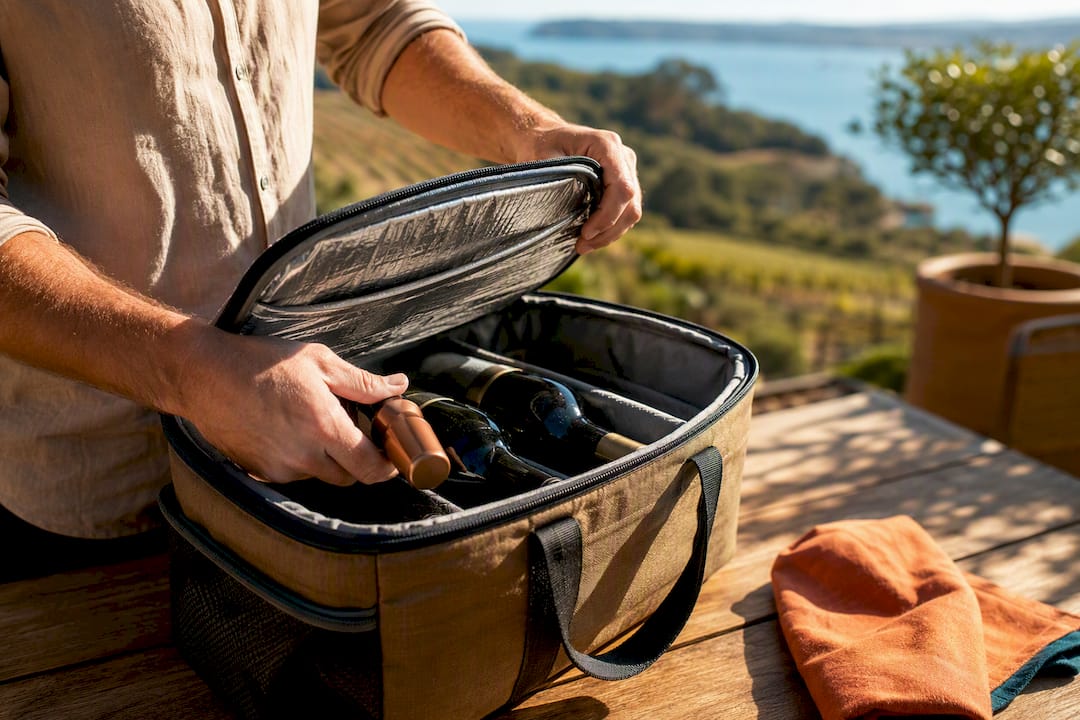
Keep bought bottles cool and stable in an insulated or padded carrier, and ask wineries to hold anything you don’t need right away. Transit, not cellar temperature, is what actually threatens your wine on Waiheke Island. Heat spikes and rough handling between vineyard stops do more damage in one afternoon than a slightly warm room ever would. Guided tours remove most of that risk simply by handling logistics for you.
TL;DR:
Proper wine transport on Waiheke relies on insulated bags, neoprene sleeves, and ice packs to prevent temperature swings that damage corks and spoil bottles.
Avoid leaving purchased wine in hot car boots, and instead, keep bottles in shaded, insulated spaces during vineyard hopping and ferry crossings.
Many wineries and guided tours offer storage options or shipping services, reducing the risk of spoilage from extended handling or heat exposure.
When packing wine for travel home, use padded inserts or rigid carriers, properly position bottles, and consider domestic shipping to avoid damage.
Small-group tours improve logistics by managing bottle handling, storage, and transport, offering a hassle-free way to enjoy Waiheke wine without extra stress.
Table of Contents
What’s the Best Way to Protect Wine on a Waiheke Tour?
The threat to your wine on a Waiheke day trip isn’t a few degrees off ideal cellar temperature. It’s the swing: a bottle going from an air-conditioned tasting room to a hot car boot and back again, three or four times over an afternoon. Stability matters more than hitting an exact number — those swings stress the cork and let oxygen creep in, which is exactly what ruins a bottle you just paid good money for.
Here’s what to actually pack and use:
An insulated tote or small soft cooler for anything you buy during the day
Neoprene bottle sleeves for individual bottles, especially if you’re buying a mix of reds and whites
A collapsible spittoon, which sounds unnecessary until your fourth tasting of the day
Padded inflatable inserts if any of your purchases are going straight into checked luggage
Ice packs for summer visits, tucked around bottles rather than directly against the glass
Positioning matters too. Sparkling wine should stay chilled and upright. Corked reds you plan to hold onto for more than a day or two do better lying on their side, which keeps the cork moist and the seal intact.
If you can’t guarantee safe transport, the simplest fix is to buy less than you’re tempted to. Most cellar doors on Waiheke will happily hold a purchase or arrange local shipping so you’re not carrying six bottles around in 25-degree heat. It costs nothing to ask, and it solves the entire problem before it starts.
Pro Tip: Neoprene sleeves and a compact insulated bag are cheap and pack flat, so bring them even if you’re “just going for a tasting.” Everyone ends up buying something.
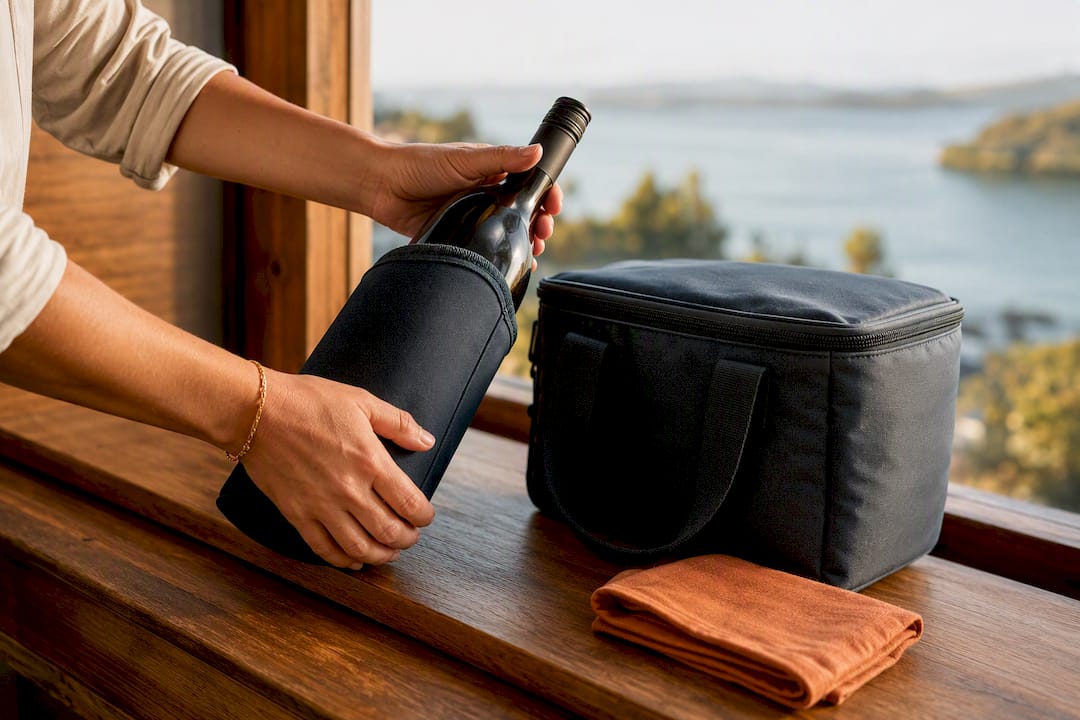
How Should You Transport Wine Between Vineyards?
The ferry crossing and the drive between cellar doors are where most damage happens, and it’s almost always preventable. A car boot on Waiheke in January can hit temperatures that cook a bottle in under an hour. That’s the single biggest mistake visitors make, and it’s an easy one to avoid.
Never leave purchased bottles in a hot car boot, even for a “quick stop”
Keep bottles in an insulated bag with ice packs if you’re driving between multiple wineries
On the ferry, keep wine with you rather than in checked bags where it’s out of sight and out of your control
During short crossings, hold bottles on your lap or store them in a shaded part of the cabin, not on a sun-exposed deck
If you need to set bottles aside briefly, like during lunch, place them in a shaded, ventilated spot and keep that window short
If you’re on a guided tour, ask upfront what the operator does with purchases. Most tours that include tastings and vineyard hopping have a system for this already, whether that’s a cooled compartment in the vehicle or a staff member who manages it while you focus on the tasting itself. Self-guided visitors carry more responsibility here, since there’s no one else managing bottle placement, temperature, or how long something sits in the sun. Vibration also matters more than people expect — a bottle rattling around loose in a car boot on Waiheke’s hillier roads takes a beating even if the temperature stays fine.
Can I Store Wine Overnight on Waiheke?
Yes, and it’s simpler than most visitors assume. Waiheke’s cellar doors and hospitality operators deal with this constantly, especially in peak season when tourists buy more than they can carry comfortably.
Ask the winery to hold your purchase. Many cellar doors on Waiheke offer a hold-for-collection service, storing bottles in a cool, shaded area until you’re ready to pick them up. Get a written or emailed confirmation before you leave.
Use your accommodation’s fridge or reception service. If you’re staying overnight, most hotels and holiday rentals will refrigerate a bottle or two, and a padded carrier inside the fridge protects the label and cork from condensation.
Consider a storage facility for larger collections. If you’re buying a serious quantity to collect later, climate-controlled facilities like Kennards Self Storage in Auckland exist for exactly this. It’s overkill for a couple of bottles, but useful if you’re building a case to ship home.
How Do You Pack Wine for the Trip Home?
Getting bottles home in one piece comes down to padding, positioning, and a bit of planning before you even leave the winery.
Use padded inflatable inserts or a rigid wine carry-on case for checked luggage
Wrap clothing around bottle necks and seals, since that’s where breaks and leaks usually start
On ferries or buses, keep bottles in a soft insulated bag and stay off sun-exposed decks
Check your airline’s policy on carrying wine before you fly, since limits and packaging rules vary
If you’ve bought several bottles, ask about domestic New Zealand shipping rather than risking it in a suitcase
A rigid wine shipping carton built for travel beats a plastic bag every time, and most wine shops sell them cheaply if the winery doesn’t have one on hand.
How Does the Italian on Waiheke Help With Wine Logistics?
Small-group tours solve most of this problem before it becomes one. The Italian on Waiheke runs groups of up to six people, which means guides can actually keep track of what everyone’s buying and how it’s being stored, rather than managing a bus load of purchases with no system at all.
That handling shows up in a few practical ways:
Guides help pack purchased bottles securely between stops
Wine travels in the vehicle rather than in your hands or a hot boot
Guides can advise on holding a purchase at the winery or arranging shipping if you’ve bought more than you want to carry
If you know you’ll want to buy wine but don’t want to think about ice packs, car boots, or ferry timing, a guided tour handles that logistics side of the day for you. It’s one less thing to manage while you’re trying to actually enjoy the tasting.
Pro Tip: If you’re an international visitor flying out within a day or two of your tour, mention it to your guide early. They can point you toward wineries that ship internationally so you’re not stuck packing fragile bottles into a suitcase at the last minute.
Luca’s quick checklist for a smooth wine day on Waiheke
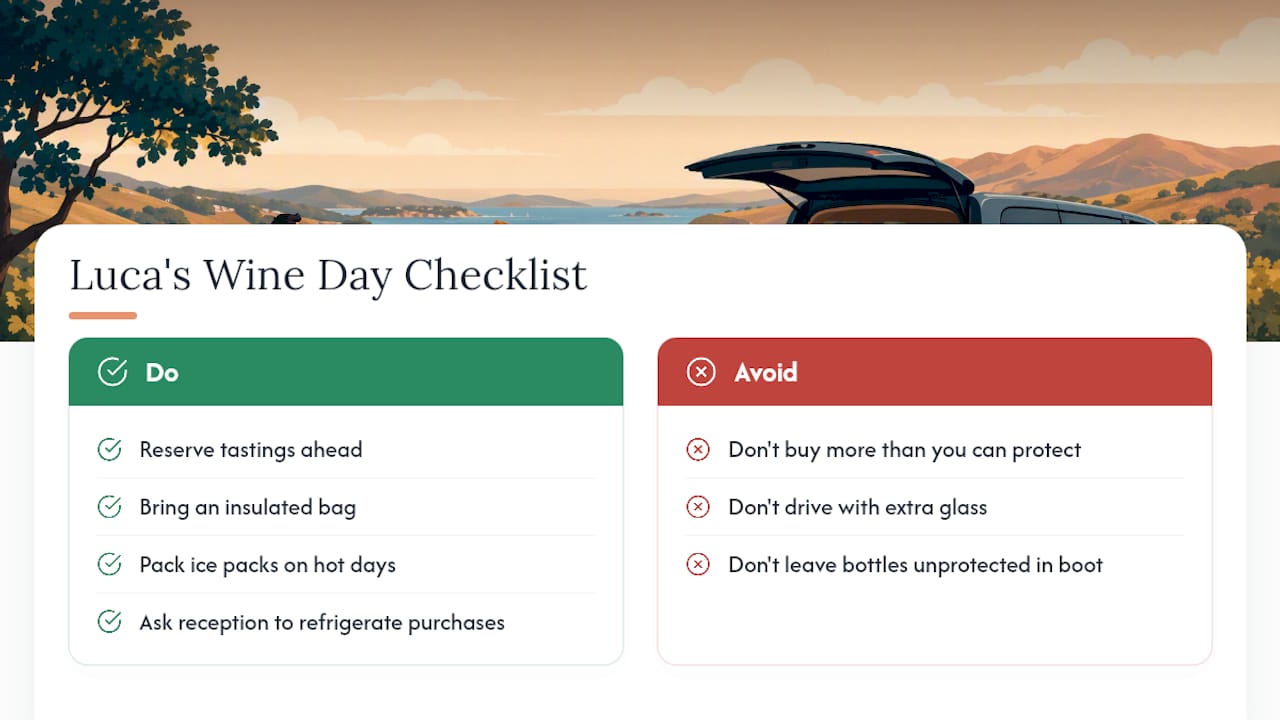
Reserve your tastings ahead of time, especially in summer when popular cellar doors fill up fast. Bring an insulated bag no matter how confident you feel about the weather. Buy only what you can actually protect on the way home, and don’t be shy about asking a winery to hold the rest. If you’re driving yourself, skip the extra glass and let someone else handle transport.
On hot days, ice packs in your bag aren’t optional. On rainy days, a dry padded carrier keeps water off labels and corks. Staying overnight? Ask reception to refrigerate anything you’re not drinking that night. None of this is complicated. It just needs to happen before you’re standing in a car boot at 30 degrees wondering why your rosé tastes off.
— Luca
Book a Tour That Handles the Wine for You
The Italian on Waiheke is built for visitors who’d rather taste and buy without babysitting bottles all afternoon. Groups stay small, capped at six people, so guides can actually manage transport, packing, and storage logistics instead of leaving you to figure it out between vineyard stops.
That’s the real difference between a self-guided day and a guided one: someone else is thinking about ice packs, boot temperature, and ferry timing while you focus on the wine and the company. If you’re planning a Waiheke visit and want the bottle-handling problem solved before you even land, book your tour now or check available dates through the online booking page.
Sources
For more detail on the guidance in this article, these sources cover storage principles and Waiheke-specific tour logistics in more depth:
FAQ
What is the 20 minute wine rule?
It refers to letting a warm bottle of red rest for a short while before serving to bring it closer to ideal drinking temperature. On a Waiheke tour, the same logic applies in reverse: a bottle that’s spent time in a hot car needs time to stabilize before you’d want to drink it.
What is the best vineyard on Waiheke Island?
Waiheke has dozens of boutique cellar doors, each with a different style and setting, so “best” depends on what you’re after. The Italian on Waiheke selects a rotation of boutique vineyards for its small-group tours rather than committing to a single stop, which gives guests variety across a day.
How much does a wine tasting tour cost on Waiheke Island?
Standard shared guided tours typically run NZ$150 to $200 per person, usually including ferry transfers and transport between vineyards. Private, small-group wine tasting experiences often include tailored attention and gourmet dining options.
What is the best wine tour in New Zealand?
New Zealand has strong wine regions from Marlborough to Central Otago, but Waiheke Island is unique for combining boutique vineyards with a short ferry ride from Auckland. For visitors who want an intimate, small-group experience rather than a large commercial bus tour, some tours focus on groups of up to six people paired with local culinary insight.
Recommended
Comments