
90% Red Vineyards: Waiheke Bordeaux Blends to Cellar in New Zealand


Waiheke Bordeaux blends are New Zealand’s warmest-climate expression of the Cabernet Sauvignon, Merlot, Cabernet Franc, Malbec, and Petit Verdot family, grown on a small volcanic island 40 minutes from Auckland by ferry. The island’s maritime mesoclimate ripens Cabernet Sauvignon more fully than almost anywhere else in the country, producing concentrated, structured reds built to age. What follows covers the terroir, the grapes, the producers to seek out, and where to taste them.
TL;DR:
Waiheke’s Bordeaux blends are produced in small quantities with high ripeness, making them rare and often expensive collector’s wines.
The island’s warm, dry autumns and clay soils enable full ripening of grapes like Cabernet Sauvignon, resulting in structured, age-worthy reds with distinct mineral texture.
Top producers such as Stonyridge, Destiny Bay, and Mudbrick craft wines with a focus on parcel selection, small-lot fermentation, and vintage-specific blending.
These wines typically require 5 to 8 years to reach optimal drinkability, with flagship bottles capable of aging well into the 2030s.
Accessing Waiheke Bordeaux blends often involves booking cellar-door tastings, joining mailing lists, and seeking out specialist retailers or guided small-group tours.
Table of Contents
What Makes Waiheke’s Red Wine Tradition Distinct
Waiheke’s reputation as a serious red-wine island is younger than you’d think. Commercial planting only took off in the 1980s, when a handful of growers noticed the island’s north-facing slopes and free-draining clay held onto summer heat longer than almost anywhere else near Auckland. Stonyridge planted its first Cabernet-dominant vines in 1982, and within a decade the island had staked its claim as New Zealand’s answer to the Bordeaux model, minus the flat gravel terraces and with a lot more Pacific breeze.
Scale tells the real story here. Waiheke is tiny by wine-region standards, but its plantings skew heavily toward red varieties, and the Bordeaux blend has become the island’s defining style, with roughly 90% of the vineyard area given over to red grapes. Cabernet Sauvignon usually leads these blends, with Merlot, Cabernet Franc, Malbec, and Petit Verdot rounding things out in varying proportions from vintage to vintage.
That red-heavy profile sets Waiheke apart from other New Zealand regions in a few concrete ways:
Hawke’s Bay grows Bordeaux varieties too, especially on the Gimblett Gravels, but its blends tend toward a slightly leafier, more herbal register because the growing season runs cooler on average.
Marlborough is almost entirely a white and Pinot Noir story; Bordeaux reds barely register there.
Waiheke produces smaller volumes per hectare but consistently richer, more tannic wines, closer in texture to a warm-vintage Right Bank Bordeaux than to anything else grown domestically.
That combination of small scale and outsized ripeness is why collectors and sommeliers treat Waiheke Cabernet-based reds as a category of their own rather than a regional variant of a national style. Total plantable land on the island is limited by geography and zoning, so production stays boutique almost by default. That scarcity, paired with the ripeness the site delivers, is a large part of why flagship bottlings from Waiheke command prices that rival top-tier reds from anywhere else in the country.
Why Waiheke’s Soil and Climate Suit Bordeaux Grapes
Cabernet Sauvignon is a stubborn, late-ripening grape, and it needs heat late into the season to shed its green, unripe edge. Waiheke delivers that heat more reliably than the mainland does. The island runs roughly 2 to 3 degrees Celsius warmer than central Auckland during summer, and its autumn stays long and dry, which lets growers leave Cabernet and Malbec hanging until tannins soften and sugars climb without the fruit rotting on the vine.
Statistic Callout: Waiheke’s summer temperatures run 2 to 3°C above mainland Auckland, and its dry autumn window is long enough to fully ripen late-finishing red varieties that would struggle elsewhere in the region.
Soil does the rest of the work. Much of the island sits on clay-based, low-fertility, mineralized ground, and that combination is directly tied to the texture in the glass. According to the Waiheke Wine Growers Association, these clay soils are associated with improved mouthfeel and firmer structure in Merlot and other red varieties, though they demand constant vineyard attention: drainage has to be actively managed, organic matter needs topping up, and pH has to stay in a workable range or vine health suffers fast.
The island isn’t uniform, and that’s part of what makes tasting across producers interesting. A few things shift the wine style from block to block:
Sheltered valleys, like those around Onetangi, trap heat and produce riper, plusher fruit with softer tannins.
Exposed headland sites catch more wind off the Hauraki Gulf, which slows ripening slightly and tends to preserve more acidity and a firmer tannic edge.
Aspect matters more here than on flatter mainland vineyards. A north-facing slope a few hundred meters from a south-facing one can ripen a week or more apart.
That variability is exactly why top producers don’t treat Waiheke as one homogenous appellation. Winemakers here lean hard on parcel selection and small-lot fermentation, picking and vilifying individual blocks separately so a difficult vintage in one corner of the vineyard doesn’t drag down the whole blend. It’s a labor-intensive approach, and it’s a big reason the best Waiheke Bordeaux blends taste more precise, vintage after vintage, than their production volumes would suggest.
The Grapes Behind the Blend: Roles and Ratios
A Waiheke Bordeaux blend isn’t one grape wearing a fancy label. It’s an assembly, and each variety earns its place by doing a specific job.
Cabernet Sauvignon is almost always the backbone. It’s thick-skinned, late-ripening, and loaded with firm tannin, which gives these wines their structure and their ability to age for a decade or longer. On Waiheke, where the season runs warm enough to fully ripen it, Cabernet Sauvignon typically makes up the largest share of the blend in most flagship bottling.
Merlot fills in what Cabernet leaves out. It ripens earlier, carries softer tannins, and adds flesh and roundness to a wine that would otherwise feel austere in its youth. Producers lean on Merlot more heavily in cooler vintages when Cabernet struggles to reach full ripeness.
Cabernet Franc contributes aromatic lift and a savory, sometimes peppery note, along with acidity that keeps the whole blend from feeling heavy. It’s rarely the majority grape, but its presence changes the nose of a wine noticeably.
Malbec and Petit Verdot show up in small percentages, often under 10% each, and they earn their spot through color and spice rather than volume. Malbec deepens the color and adds a dark-fruit sweetness; Petit Verdot brings structure and a floral, violet-like edge even in tiny amounts.
The Waiheke Wine Growers Association’s variety pages outline these roles in more detail, and the ratios shift year to year depending on how each block performed. A warm, dry vintage might push Cabernet Sauvignon to 70% or more of a blend; a cooler year might see Merlot and Cabernet Franc take on a bigger share to compensate. A handful of growers experiment on the margins with varieties like Montepulciano, but these remain fringe plantings rather than anything that defines the island’s style.

Flagship Producers Making Waiheke’s Best Bordeaux Blends
Seven names come up again and again when people talk about serious Waiheke reds, and each has carved out its own version of the Bordeaux-blend formula.
Stonyridge put Waiheke on the map, and its flagship Larose remains the benchmark against which every other island Cabernet blend gets measured. Cabernet-dominant with Merlot, Cabernet Franc, and Malbec in support, Larose is famous for selling out fast and aging beautifully for well over a decade. Allocations are tight, and cellar-door visits are the most reliable way to taste current and back vintages.
Mudbrick makes some of the island’s most polished reds under its Reserve and Velvet labels. Coverage of the winery has noted that Mudbrick keeps volumes deliberately small while chasing top quality, and its Reserve Red shows the kind of dark-fruited, cedar-laced style that has become a house signature. Mudbrick’s restaurant and cellar door make it one of the easier flagship producers to visit without an appointment months in advance.
Destiny Bay built its entire reputation on Cabernet-led Bordeaux blends, and its top wine, Magna Praemia, sits at the very top of the island’s price tier. Reviewers have called out the winery’s powerful fruit, polished tannins, and long ageing trajectory as defining traits. A tasting of the winery’s Destinae bottling from a recent vintage described it as full-bodied with blackberry, blackcurrant, and toasty barrel spice, with tannins polished enough to suggest cellaring into the 2030s. Destiny Bay leans on strict parcel selection, matching specific slopes to specific varieties, to keep quality consistent across variable vintages.
Man O’ War runs some of the largest vineyard holdings on the island and produces two Bordeaux-style reds worth seeking out: Ironclad, its flagship Cabernet blend, and Warspite, a Cabernet Franc-forward wine with a more perfumed, elegant profile. Man O’ War’s scale means its wines are somewhat easier to find in specialist retail than some of the tiny-production estates.
Te Motu has been quietly consistent for decades, producing a Cabernet Sauvignon and Merlot blend that trades flash for reliability. It’s a good entry point for someone new to Waiheke reds who wants the regional character without the flagship-level price tag or the wait list.
Goldie Estate occupies the site of one of the island’s original vineyards, and its reds carry a slightly more savory, earthy edge than some of the riper, more fruit-forward wines nearby. It’s worth tasting specifically for that contrast.
Obsidian rounds out the list with reds that lean into the island’s volcanic soil character, often showing a mineral, almost graphite-like undertone alongside the usual dark-fruit core. Its cellar door offers one of the more relaxed tasting experiences on the island, without the allocation pressure of the bigger names.
Availability varies enormously across this group. Some, like Stonyridge and Destiny Bay, sell through mailing lists and allocations that fill up well ahead of release. Others, like Te Motu and Obsidian, are more consistently available through cellar door and specialist retail.
What These Wines Taste Like and How Long They Last
Pour a well-made Waiheke Bordeaux blend and you’ll usually find a consistent aromatic core: blackcurrant and cassis up front, plum and dark cherry underneath, with violet florals and a cedar or graphite edge depending on the producer’s oak regime. Toasty barrel spice, from vanilla to clove, shows up more in the fuller-bodied flagship wines than in lighter, earlier-drinking bottlings.

Texture is where clay soil really shows its hand. Tannins on well-made examples come across as fine-grained and polished rather than gritty, a trait tasters have flagged specifically in top bottlings like Destiny Bay’s Destinae. That’s a direct result of the island’s mineralized clay and the careful canopy and fruit management producers use to manage it.
Ageing potential runs longer than most drinkers expect from a New Zealand red. A few guidelines worth keeping in mind:
Everyday Waiheke reds, without a flagship label, generally drink well within 3 to 6 years of vintage.
Flagship bottlings from producers like Stonyridge, Destiny Bay, and Man O’ War often need 5 to 8 years to unwind fully, and top vintages can reward over a decade in the cellar.
Waiheke’s warm ripening window gives Cabernet a riper, almost Pomerol-like profile compared to cooler-climate New Zealand reds, which is part of why these wines hold up so well in bottle.
Pro Tip: Decant a young flagship Waiheke red for at least 60 to 90 minutes before serving. The tannins are there for the long haul, and giving the wine air softens that youthful grip without dulling the fruit.
How to Taste and Buy Waiheke Bordeaux Blends in New Zealand
Getting your hands on these wines takes a bit more planning than walking into a bottle shop, especially for the smaller producers.
Book cellar-door visits ahead of time. Most Waiheke wineries take reservations for tastings, and the smaller, more sought-after producers often cap numbers per session. Weekday mornings tend to be quieter than weekend afternoons, and you’ll get more time with the person pouring.
Join mailing lists for allocation-only releases. Wines like Stonyridge Larose and Destiny Bay’s top labels rarely sit on retail shelves in meaningful quantity. Producers sell a large share direct to mailing-list members before a bottle ever reaches a merchant.
Search specialist wine merchants rather than general retailers. Independent wine shops with a strong New Zealand focus are far more likely to carry limited-run Waiheke reds than supermarket wine aisles, which rarely stock anything beyond the most widely distributed labels.
Watch release timing. Most producers release their current vintage in spring or early summer, and flagship wines often sell through their initial allocation within weeks. If you miss a release, back-vintage availability at the cellar door is often your best bet.
Use a guided tour to access wines you can’t easily get otherwise. Vineyard tours frequently carry relationships that get small groups into tastings of limited releases or library vintages that aren’t offered to walk-in visitors.
Pairing Waiheke Bordeaux Blends With Food
These are structured, tannic wines, and they want food that can stand up to them. Classic pairings work here for good reason: roasted lamb, char-grilled beef, and richer game dishes all have enough fat and protein to soften a young wine’s tannin and let the fruit come forward. In a New Zealand context, a lamb rack with a rosemary crust or a slow-cooked, hangi-inspired dish with root vegetables and smoky protein does the job just as well as anything from a French bistro.
Serving temperature matters more than people think. Pull these wines a few degrees cooler than “room temperature” suggests, aiming for around 16 to 18°C, and give them time in a decanter before pouring:
Younger flagship bottlings benefit from 60 to 90 minutes of air.
Wines with a decade or more of bottle age need gentler handling; 20 to 30 minutes in a decanter is usually enough to wake them up without flattening delicate aromatics.
A large-bowled Bordeaux-style glass helps concentrate the aromatics and gives the tannins room to soften on the palate.
For a multi-course vineyard meal, save the fullest-bodied Waiheke reds for the main course rather than opening them with lighter starters, and consider a thoughtful approach to building a full tasting menu that lets the wine’s structure carry through the meal instead of overwhelming an earlier, lighter dish.
What Small-Group Tastings Reveal About These Wines
Tasting a Waiheke Bordeaux blend at a crowded cellar door on a Saturday afternoon is a very different experience from tasting it in a small group with time to actually talk to the person who made it. Context changes what you notice in the glass, and context is exactly what a rushed tasting doesn’t give you.
Small-group formats, capped at six guests, change the dynamic in a few concrete ways:
You get real time with the winemaker or cellar-door host instead of a scripted five-minute pour.
Groups this size can access top-site fruit and library vintages that larger tour buses simply don’t get offered.
Pairing each wine with a course built around it, rather than tasting on its own, makes the terroir differences between producers far easier to pick out.
That kind of focused, conversational access is where a lot of people first understand why one Waiheke Cabernet blend tastes noticeably different from the vineyard next door, even when both are working with the same varieties and a similar climate.
Why These Reds Deserve More Attention Than They Get
Waiheke doesn’t get talked about the way Marlborough Sauvignon Blanc does, and that’s a mistake. Small-batch, terroir-focused production is exactly why the island’s best Bordeaux blends compete with far more expensive wines from far more famous places. Anyone serious about New Zealand reds should be tasting across producers and vintages here, not just picking one bottle and calling it done. The differences between a cool, breezy vintage and a hot, dry one are dramatic enough to change how you think about the whole category.
— Luca
Taste These Wines the Way They’re Meant to Be Tasted
Reading about Waiheke’s Bordeaux blends only gets you so far. Tasting Stonyridge, Destiny Bay, or Mudbrick’s top reds side by side, with someone who can explain why they taste different, is a different kind of education entirely.
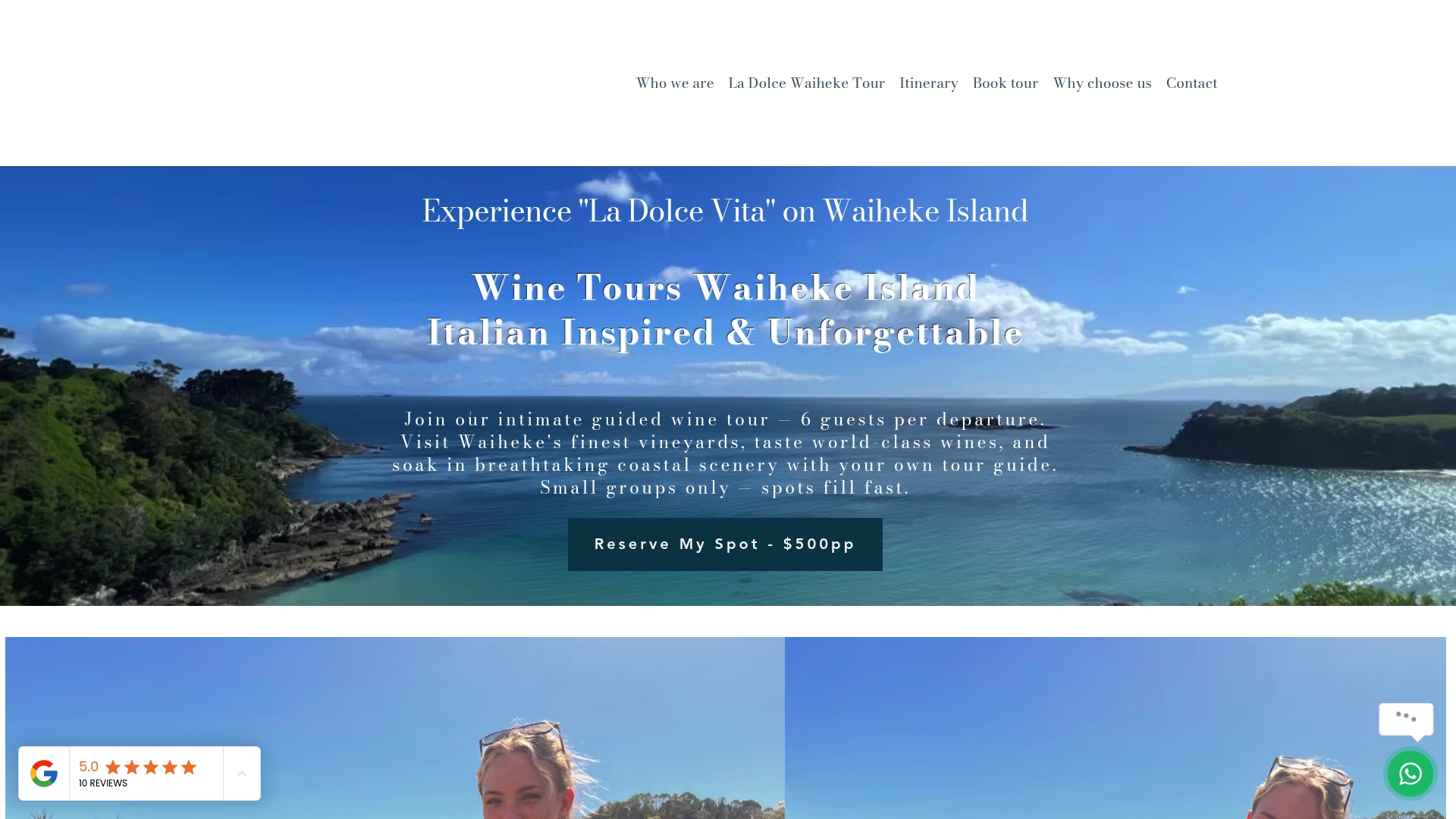
Theitalianonwaiheke runs small-group tours capped at six guests, which means you’re not fighting a crowd for a pour or a question at the cellar door. The La Dolce Waiheke Tour (350 NZD per person) pairs boutique vineyard visits with gourmet local dining, and the Michelin Star Waiheke Experience (650 NZD per person) takes that further with a chef-led culinary focus alongside the wine. Both formats are built around the kind of relaxed, conversational tasting that a rushed commercial tour bus simply can’t offer. If you’d rather have the whole day built around your group alone, the Private Tour (500 NZD per person) covers that too, and there’s more detail on booking a wine tour experience if you want to see how a typical day runs. Check dates and book your Waiheke wine tour directly to lock in a small-group slot.
Sources
For deeper detail on Waiheke’s climate, soils, and grape varieties, the Waiheke Wine Growers Association’s climate page and variety pages are the most reliable primary sources. Individual winery websites, including Stonyridge, Destiny Bay, and Mudbrick, list current release and tasting-availability updates directly.
FAQ
What Are the Five Main Bordeaux Grape Varieties?
The five classic Bordeaux varieties are Cabernet Sauvignon, Merlot, Cabernet Franc, Malbec, and Petit Verdot. On Waiheke, all five are planted, with Cabernet Sauvignon usually leading blends and the other four filling structural and aromatic roles in varying proportions.
Which Waiheke Bordeaux Blend Is Considered the Best?
There’s no single “best,” since style preference plays a big role, but Stonyridge Larose is widely regarded as the island’s benchmark wine, with Destiny Bay’s Magna Praemia and Destinae bottlings rated among the most powerful and age-worthy examples. Mudbrick’s Reserve and Velvet labels and Man O’ War’s Ironclad also rank consistently among the island’s top expressions.
Where Can I Buy Waiheke Bordeaux Blends in New Zealand?
Cellar-door visits are the most reliable route for flagship and small-production wines, since many sell out through mailing lists before reaching retail. Specialist wine merchants with a strong New Zealand focus carry more Waiheke stock than general supermarkets, and guided tours can sometimes open access to allocations that aren’t offered to walk-in visitors.
What Is the Best Red Wine From New Zealand?
New Zealand makes strong reds in several regions, but Waiheke’s Bordeaux blends stand out for their concentration and ageing potential, driven by the island’s warm maritime mesoclimate. Pinot Noir from Central Otago and Martinborough is the other major category worth comparing, but it’s a distinctly different style built on a cooler climate and a lighter grape.
How Long Should I Cellar a Waiheke Bordeaux Blend?
Everyday bottlings drink well within 3 to 6 years, while flagship wines from producers like Destiny Bay often need 5 to 8 years and can reward over a decade of cellaring. A recent tasting of Destiny Bay’s Destinae suggested holding into the late 2020s and 2030s for wines from strong vintages.
Recommended
Comments