
Up to 6 Guests: How to Book Waiheke Wine Tours With or Without Kids


A curated small-group guided wine and culinary tour gives couples and food-focused travelers the best version of Waiheke: boutique cellar-door access, gourmet pairings, and none of the ferry math or last-minute bookings that trip up independent visits. This guide is built for adults planning an intimate wine day, not a family outing, and it draws on the Waiheke Winegrowers Association’s own framing of the island plus operators like The Italian on Waiheke to show why a guided itinerary works better than doing it yourself.
TL;DR:
Guided tours handle reservations, transport, and pairings, allowing for access to private tasting flights and winemaker conversations that DIY visits cannot offer.
Arriving at the Auckland ferry terminal at least 20 minutes early and confirming the exact sailing time prevents stressful start and missed tastings on Waiheke.
A half-day Waiheke wine experience typically includes two vineyard visits and lunch, while a full-day schedule incorporates additional tastings, vineyard tours, and gourmet meals.
Most boutique wineries are adults-only, and bringing children usually limits access and safety, making it necessary to verify policies with each venue beforehand.
Tours priced between $350 and $650 NZD per person cover most occasions, with small groups of six or fewer ensuring personalized attention from winemakers and guides.
Table of Contents
Why a Curated Guided Itinerary Beats DIY on Waiheke
The Waiheke Winegrowers Association markets the island as a combined wine, food, and culture destination, not just a strip of tasting rooms. That framing matters because it tells you what you are actually buying when you book a guided day: a sequence of moments, not a checklist of cellar doors.
Waiheke packs more than 30 working wineries onto a landmass you can drive across in under an hour, which sounds convenient until you try to book same-day tastings at three of them without a car, a reservation, or a plan. A small group of six or fewer moving together, rather than a bus of forty, gets a fundamentally different reception at most boutique cellar doors. Winemakers talk longer. Staff pour verticals that never make it onto the standard tasting menu. Restaurant tables that would otherwise require a week’s notice open up because a guide already has the relationship.
Here’s what a competent operator actually handles on your behalf:
Table reservations at winery restaurants that book out on weekends
Return and inter-venue transport, so nobody is driving after tastings
Food and wine pairings matched to what’s actually being poured that day are key to crafting authentic culinary experiences as explained in our traveler’s guide.
Access to barrel rooms, private tasting flights, or winemaker conversations not open to walk-ins
The math behind it: with more than 30 wineries and a steady calendar of masterclasses and winemaker dinners, Waiheke rewards a planned sequence far more than a wander-and-hope approach. An operator who knows the calendar can slot your visit around an event you’d never find on your own.
Ferry Timing, Transfers, and How to Avoid a Rushed First Pour
Every Waiheke wine day starts with a boat, and the boat is the part people get wrong. The direct crossing from downtown Auckland runs about 40 minutes, but that figure hides real variability. Fullers360 and Island Direct both publish timetables that shift with the season, and some sailings route via Devonport, which adds real time to the crossing.
Treat the ferry as part of the day, not a formality before it starts. A few concrete margins prevent a stressful start:
Arrive at the Auckland ferry terminal at least 20 minutes before your scheduled sailing, longer during summer weekends when queues build fast.
Check whether your sailing routes direct or via Devonport. A Devonport stop can add 15 to 20 minutes to what looks like a 40-minute trip on paper.
Never schedule your first tasting for the moment your ferry is due at Matiatia. Build in at least 15 minutes for disembarking and meeting your guide.
Confirm your tour operator has matched your booking to a specific sailing time, not just a general morning or afternoon slot.
During public holidays and peak summer weeks, timetables change without much warning, so check the operator’s site the morning of your trip.
Pro Tip: Ask your operator to name the exact sailing they’re planning around when you book, not just a rough time window. If they can tell you “the 9:00am direct from downtown,” that’s a sign they’ve actually built your day around the ferry rather than hoping it works out.
Meeting points at Matiatia can be confusing for first-timers. Confirm at booking time whether your guide meets you at the wharf, arranges a shuttle, or expects you at a specific pickup point, and get that in writing before travel day.
Sample Half-Day and Full-Day Wine Itineraries
A well-built Waiheke day has rhythm to it. Here’s what that actually looks like on the clock, factoring in the ferry margins above.
Half-day sample (roughly 9:00am to 2:00pm):
9:00am: Direct ferry departs downtown Auckland
9:45am to 10:00am: Arrival at Matiatia, transfer to first vineyard
10:15am to 11:15am: First cellar door, guided tasting flight
11:30am to 12:30pm: Second boutique vineyard, smaller pours paired with light bites
12:45pm to 1:45pm: Paired lunch or tasting plate at a winery restaurant
2:00pm: Return transfer toward the ferry terminal
Full-day sample (roughly 9:00am to 5:00pm):
Morning: Two vineyard visits with guided flights, similar to the half-day structure
Midday: A vineyard tour that goes beyond the tasting room, walking the rows and hearing how the site shapes the wine
Early afternoon: A proper sit-down lunch at a cellar-door restaurant like Cable Bay, which pairs tastings with a full dining room
Late afternoon: A third, more intimate tasting, sometimes with an optional add-on
Guests consistently remember the meal that came with a story attached, not just the wine that was poured. A chef explaining why a dish was built around that afternoon’s pinot gris does more for a day than another flight of five wines ever will.
Optional add-ons worth asking about when you book a full day: a private chef dinner back at your accommodation, a short mindfulness or stretching session between tastings to reset the palate, or a Michelin-style pairing menu for a special occasion. These aren’t standard inclusions on most tours, so confirm availability and pricing directly with your operator.
What the operator typically supplies: transport between venues, reservations, the tasting sequence, and pairing knowledge. What you should bring: valid ID for tastings, any dietary restrictions flagged in advance, and enough cash or card for optional purchases at cellar doors that don’t run through the tour’s booking system.
Booking Checklist: What to Confirm Before You Reserve
A good operator answers these questions without hesitation. If they can’t, that’s worth noting before you pay a deposit.
What is the exact meeting point at Matiatia, and how will I recognize my guide?
Which ferry sailing is my tour built around, and what happens if I miss it?
Can the group accommodate dietary restrictions, and how far in advance do you need to know?
What is the maximum group size? Confirm it stays at six guests or fewer for the intimacy you’re paying for.
Is the venue wheelchair or mobility accessible, and are there stairs at any cellar door on the route?
What exactly is included in the price, and what costs extra (bottle purchases, gratuities, upgrades)?
Payment norms on Waiheke tours typically mean a deposit or full payment at the time of booking, with cancellation windows that vary by operator, so ask for the specific terms in writing rather than assuming. Tipping in New Zealand is not obligatory the way it is in the United States, but a modest gratuity for an exceptional guide is appreciated and increasingly common on premium experiences.
Pack for the day, not just the tastings: comfortable shoes for vineyard terrain, sun protection even on overcast days, and a light layer for the coastal wind that picks up by mid-afternoon.
Pro Tip: When you book, ask the operator to lock your tour start time to a specific ferry sailing rather than a general time of day. That single detail prevents more missed tastings than any other piece of planning.
Understanding Family Policies at Waiheke Wineries
Most boutique wineries on Waiheke are built around adult tasting experiences, and cellar doors vary widely in how they handle younger visitors. Some restaurant-attached vineyards allow children in dining areas but keep tasting rooms and barrel rooms adults-only, particularly during peak weekend service when space and staff attention are limited.
If your travel plans do include children, that’s a genuinely different trip than the one this guide covers. A curated small-group culinary wine tour, the kind built around up to six adult guests, is designed around uninterrupted tastings, longer winemaker conversations, and a pace that assumes everyone in the group is there for the wine and the food. Bringing very young children into that format usually means compromising the experience for everyone, including the family itself.
For couples and small groups without kids in tow, this distinction actually works in your favor. It’s part of why boutique operators can offer the kind of access described earlier: smaller adult groups move faster, linger longer over a single glass, and don’t need the operator to manage a second set of logistics around nap times or kid-safe spaces. If you’re specifically looking for a trip built for children, contact individual wineries directly, since policies differ property to property and change seasonally.
What to Know Before Bringing Anyone Underage
Wine production areas carry real hazards. Barrel rooms have uneven flooring and heavy equipment, and tasting rooms handle alcohol as their core product, which means most venues treat these spaces as adult environments by default rather than as an oversight.
Vineyards themselves add outdoor risks that don’t always register until you’re standing in one: exposed irrigation lines, farm vehicles moving between rows during harvest season, and open water features at some coastal properties. Waiheke’s terrain also means uneven ground and sometimes steep paths between the cellar door and the vines, which matters for anyone unsteady on their feet.
If you are weighing whether to bring extended family with children on any part of a New Zealand wine trip, the honest answer is that a small-group adult-focused tour and a family outing are two different products with two different safety profiles, and conflating them usually disappoints someone. Confirm directly with any venue what their policy actually allows before assuming.
Choosing Vineyards That Match Your Group
Not every Waiheke winery suits the same kind of day. Some properties, like Cable Bay, pair cellar-door tastings with a full restaurant, which gives a group flexibility if members want to eat while others taste. Others, such as Stonyridge, lean into a more traditional, quieter tasting room experience built around the wine itself rather than a dining program.
The right match depends on what your group actually wants from the day. A group focused purely on tasting technique and winemaker conversation does better at a smaller, quieter cellar door with limited foot traffic. A group that wants wine as the backdrop to a longer lunch does better at a property with a proper kitchen and dining room attached. Man O’ War offers a third variation entirely, with dramatic vineyard views that make the setting as much a part of the visit as the pours themselves.
A guide who knows these differences ahead of time saves you from guessing. That’s the real value in letting an operator build the sequence: they’ve already walked the ground at each property and know which one fits which mood, rather than you discovering the mismatch after you’ve already committed the afternoon.
Where to Eat Around a Wine Day
Winery restaurants do the heaviest lifting on a curated wine day, since they let a group taste and eat in the same setting without a separate transfer. Properties with dining rooms attached to the cellar door, like Cable Bay, typically build menus specifically to pair with what’s being poured that day, which tends to produce a better meal than a generic lunch stop chosen for convenience.

For groups who want something more elevated than a standard winery lunch, a Michelin Star pairing experience or a private chef dinner back at accommodation turns the meal itself into the centerpiece of the day rather than a break between tastings. These options work particularly well for anniversaries, milestone birthdays, or any occasion where the food deserves equal billing with the wine.
Smaller cafes and casual food trucks exist around the island’s main village areas too, and they’re a reasonable option if your group wants a lighter, faster bite between two tastings rather than a sit-down meal. The trade-off is obvious: you lose the paired-menu experience that a winery restaurant delivers, but you gain speed and flexibility on a tighter schedule.
Keeping the Day Engaging From Start to Finish
The biggest risk on any wine day isn’t the wine, it’s pacing. A day that stacks five tastings back to back without variation tends to blur together by the third pour, and that flattens the experience for everyone in the group.
Breaking up the tasting sequence with something tactile, a vineyard walk, a short conversation with the winemaker about how the season went, or a tour through the working parts of the property, keeps attention sharp and gives the wine itself more context when you get back to the glass. Spacing food throughout the day rather than saving it all for one lunch also helps: a tasting plate between the first and second cellar door does more for group energy than a heavy meal that leaves everyone sluggish for the afternoon’s remaining pours.
For guests newer to structured tastings, asking the guide to slow down and explain what’s actually happening in the glass, rather than just pouring and moving on, turns a passive tasting into something genuinely memorable. The best operators read the room and adjust pace accordingly rather than running a fixed script regardless of who’s in the group.

What a Small-Group Wine Day on Waiheke Actually Feels Like
The gap between a marketing photo of a Waiheke vineyard and the actual experience of standing in one comes down to scale. A group of six moving through a cellar door gets a winemaker’s undivided attention in a way a coach tour never will, and that changes what the day actually delivers: real conversation, tastings poured with context, and a pace that matches the group rather than a schedule built for forty strangers.
Some boutique tour operators build tours around small group sizes, keeping groups small so guests can form a genuine connection with their guide rather than just following a flag through a vineyard. Boutique cellar-door visits paired with gourmet dining and, for some experiences, optional wellness add-ons, are what separate an intimate day from a commercial one. Guest feedback consistently points to the same detail: it’s the unscripted moment, a winemaker pouring something not on the tasting menu, or a chef explaining a dish mid-course, that guests remember months later.
— Luca
Book a Small-Group Waiheke Wine Tour
The Italian on Waiheke runs boutique tours capped at six guests, the kind of scale that gets you a winemaker’s real attention instead of a rehearsed script, at a fixed per-person price with no hunting for cellar-door reservations yourself. Three main options cover most occasions: the La Dolce Waiheke Tour at $350 NZD per person for a full day of boutique tastings and gourmet pairings, the Michelin Star Waiheke Experience at $650 NZD per person for an elevated pairing menu, and a fully Private Tour at $500 NZD per person for groups wanting the day built entirely around them.
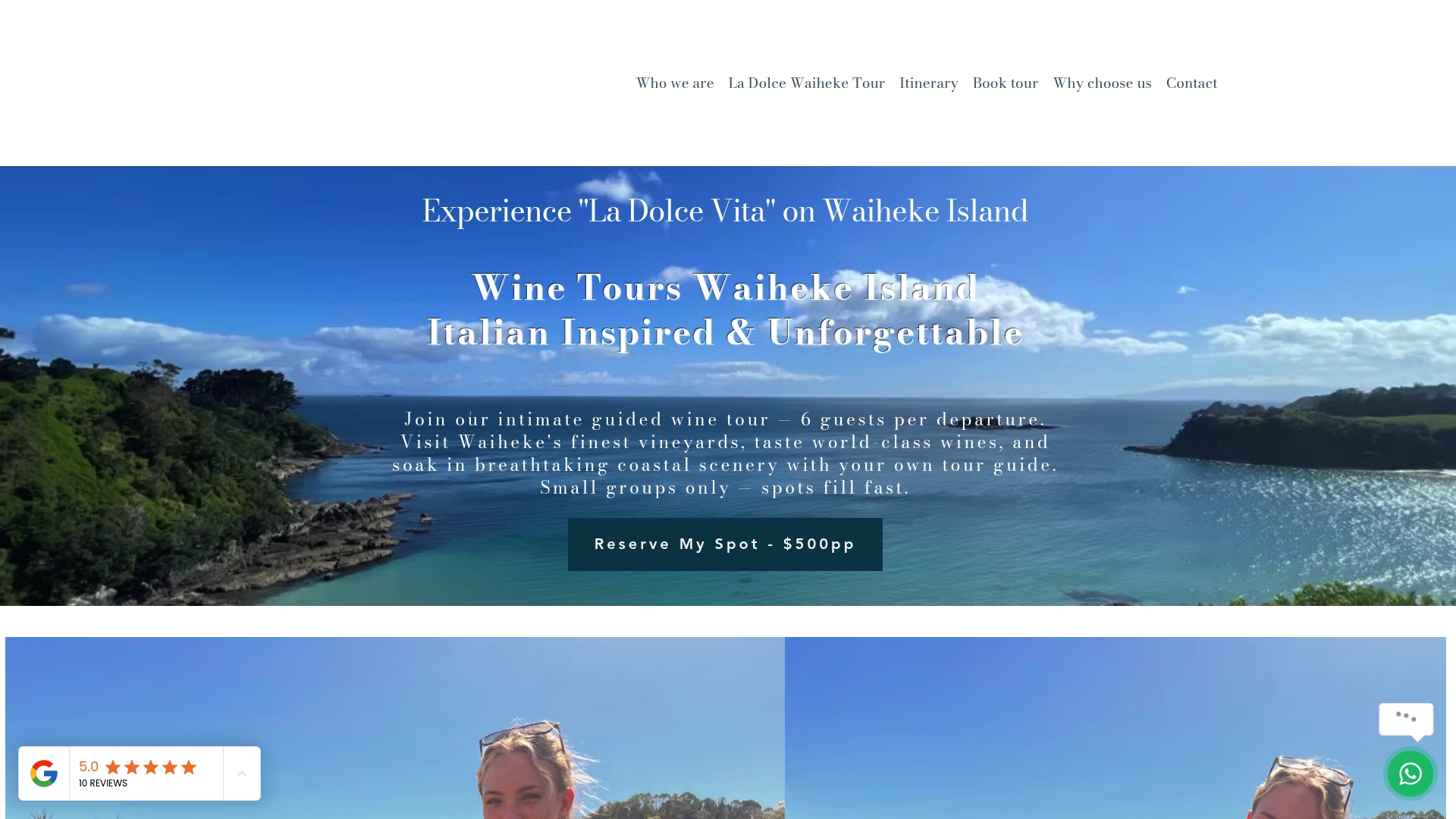
Private chef dinners and cooking lessons are also available for groups wanting to extend the experience back at their accommodation, with pricing available on request. When you book, mention which ferry sailing you’re planning to catch so your tour start time gets matched to it rather than a general morning window, the single detail that prevents more missed tastings than anything else on this list. Head to the booking page to check dates and lock in your group’s spot.
Sources
FAQ
Is Waiheke Good for a Wine Day Trip From Auckland?
Yes. The direct ferry crossing takes about 40 minutes, making a full day of tastings, a winery lunch, and a return trip easily achievable in a single day from downtown Auckland.
How Many Wineries Can You Realistically Visit in One Day?
Two to three cellar doors is realistic for a well-paced day that includes a proper meal, rather than rushing between five venues. A guided tour typically builds the sequence around this pacing so nothing feels compressed.
What Does a Small-Group Wine Tour Cost on Waiheke?
Pricing on The Italian on Waiheke’s tours starts at $350 NZD per person for the La Dolce Waiheke Tour, with a Private Tour at $500 NZD per person and the Michelin Star Waiheke Experience at $650 NZD per person. Private chef dinners and cooking lessons have pricing available on request.
Do I Need a Car to Visit Waiheke Wineries?
No. Most curated tours include transport between venues after your ferry arrival, which is one of the main practical advantages of booking a guided experience over a self-drive day.
What Should I Confirm With an Operator Before Booking?
Confirm the meeting point at Matiatia, the specific ferry sailing your tour is built around, maximum group size, and what’s included in the price versus what costs extra. Reliable operators like Fullers360 and Island Direct both publish current sailing times worth checking against your tour’s start time before you travel.
Recommended
Comments