If the Ferry Cancels: Waiheke Wine Tour Plans That Save Your Day

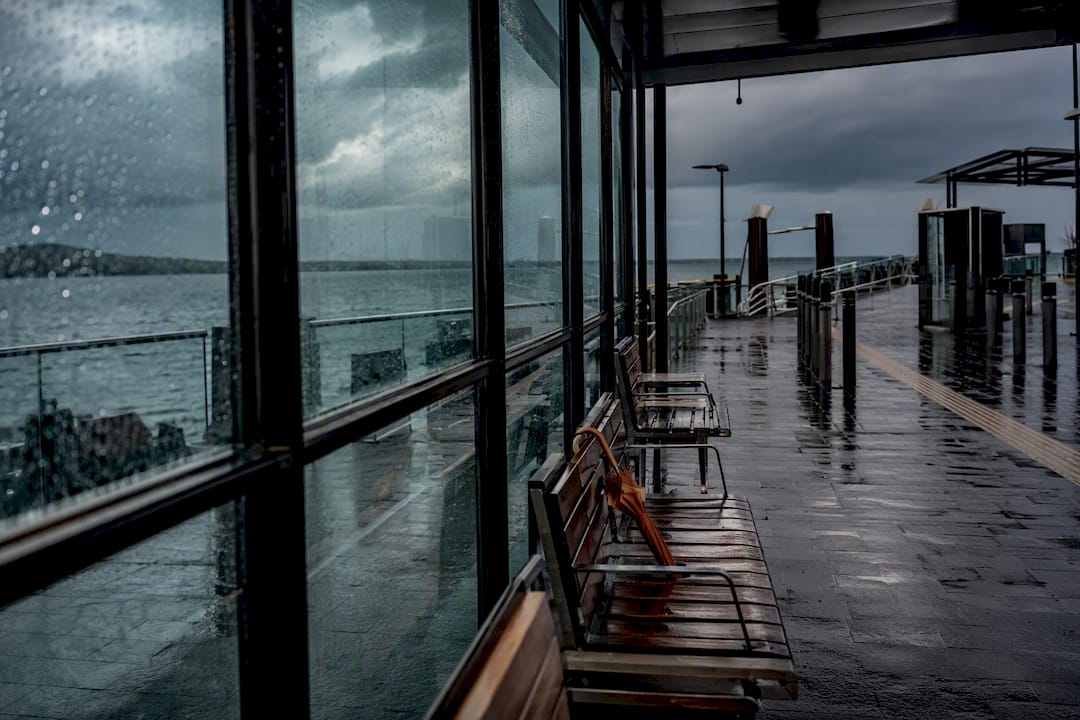
Most Waiheke wine tours run in light rain without a hitch. The real threat is the ferry, not the vineyard. Wind, swell, or fog across the Hauraki Gulf can cancel a sailing even on a day that looks fine from downtown Auckland. Before you leave, check Fullers360 or Island Direct sailing status, glance at FerryWeather or the MetService marine forecast, and call your tour operator to confirm backup plans. If your ferry gets cancelled, ring the operator immediately and ask about rebooking rather than assuming the day is lost.
TL;DR:
Regularly check ferry sailing updates from Fullers360 and Island Direct, and review marine conditions with FerryWeather and MetService before departure.
Small-group tours capped at six guests provide quicker, more flexible responses to weather changes, allowing on-the-fly adjustments like indoor tastings or private transfers.
Indoor alternatives such as Wild Estate, Waiheke Ceramics, and indoor golf at The Heke ensure experiences can continue despite rain, if booked in advance.
Building in a 1 to 2 hour buffer, front-loading indoor activities, and choosing flexible transport options help protect your day from weather disruptions.
Cancellations are mostly caused by wind, swell, or fog affecting the ferry, not rain, making marine forecast checks more reliable than land-based weather updates.
Table of Contents
Quick Pre-Departure Checklist: What to Check and Who to Call Before You Leave Auckland
Waiheke wine tours rarely get cancelled outright. What gets cancelled is the ferry that gets you there, and that’s the piece most visitors forget to check until they’re already standing on the dock. Run through this sequence the night before and again the morning of your tour.
Check live ferry status first. Fullers360 and Island Direct both post sailing updates and cancellations on their websites, and this is the single most useful five minutes you’ll spend before a Waiheke trip. Don’t rely on a general Auckland weather app. The city can look calm while the crossing itself is fogged in or kicking up short waves.
Cross-reference marine conditions. FerryWeather’s Hauraki Gulf tool tracks wind, wave height, and visibility specifically for the Auckland to Waiheke route, and MetService’s Hauraki Gulf marine forecast adds another layer of detail on conditions that change faster than a standard land forecast suggests.
Call your tour operator, not just the ferry company. Confirm your pickup point, your start time, and ask directly what their backup plan looks like if the weather turns. A good operator will already have an answer ready.
If the crossing looks marginal, act early. Booking an earlier sailing or asking about a private transfer beats waiting to see if your scheduled ferry gets pulled.
Ferry operators themselves recommend checking their own delay and cancellation pages directly rather than trusting a general forecast, since SeaLink’s guidance notes that route-specific conditions can shift faster than city weather updates.
Pro Tip: Save your operator’s phone number in your contacts before you leave home, not when you’re standing at the ferry terminal with spotty signal and a delayed sailing. Ten seconds of prep saves twenty minutes of panic.
How Ferry and Marine Weather Affects Your Tour
Auckland’s inner harbor and the open Hauraki Gulf are two different weather systems, and that distinction explains almost every ferry disruption you’ll encounter. The Waitematā Harbour near downtown is comparatively sheltered. Once ferries clear the harbor mouth and head into open water toward Waiheke, they’re exposed to wind, swell, and fog that the city skyline never shows you.
Three factors decide whether your sailing runs on time, runs rough, or gets cancelled:
Wind and gusts across the open gulf, which build wave height faster than most people expect.
Short, choppy waves, which affect fast passenger ferries more than they’d affect a larger vehicle ferry. A boat that plans around vehicle-ferry timing might handle conditions that would have your passenger ferry pitching and rolling.
Visibility and fog, which can shut down a crossing even when the sea itself is nearly flat.
That last point trips up more travelers than rough seas do. FerryWeather’s route data notes that fast ferries respond more sharply to short wave patterns than larger craft, and fog alone can force a cancellation regardless of wave height, since operators need clear sightliness for safe navigation through the gulf. You can wake up to a still, gray Auckland morning with barely a ripple in the harbor and still find your 9:00 a.m. sailing cancelled because visibility three kilometers out is down to a few hundred meters.
The practical fallout matters more than the meteorology. A cancelled morning sailing usually means your tour operator has to compress or re-sequence tastings once you actually arrive, and depending on how late you land on the island, some vineyard bookings may not be salvageable at all. This is exactly why checking the marine forecast, not just the general Auckland weather, needs to happen before you commit to a specific sailing time.
What Tour Operators Usually Do in Bad Weather
Every Waiheke operator handles weather differently, and the policy language they use tells you a lot about how they’ll treat your booking if the forecast turns ugly. Three patterns show up across the island.
“Rain or shine” operators run regardless of drizzle or overcast skies, treating light rain as part of the normal touring experience rather than a disruption.
“Operate unless extreme” operators run in most conditions but reserve the right to pause or modify the day if wind, sea state, or ferry cancellations make safe travel impossible.
“Operator discretion for safety” policies hand the final call to guides and skippers on the day, which sounds vague until you realize it usually means faster, more sensible decisions than a rigid rule could produce.
Some providers publish exactly this kind of language in their booking terms. Terra & Tide’s terms and conditions, for example, state that tours generally operate rain or shine, with rebooking or refunds available for genuinely extreme weather. That’s the standard you should look for before you pay a deposit.
Before booking, ask your operator these questions directly:
What’s the refund window if the tour is cancelled entirely?
What are the rebooking terms if I need to shift to another day?
Do you have indoor seating or tasting rooms available as a fallback?
If my ferry gets cancelled, is there transport support to get me there another way?
Small-group operators tend to pivot faster than large-scale tour companies simply because they’re coordinating fewer people. Re-sequencing a six-person day, moving lunch indoors, or shifting a vineyard visit to a private tasting room takes minutes to arrange. Doing the same for a coach full of forty guests takes considerably longer, if it’s even possible on short notice.
Proven Wet-Weather Backups on Waiheke
A rainy forecast doesn’t have to mean a wasted day. Waiheke has genuine indoor options that hold up as full experiences on their own, not consolation prizes.
Wild Estate, known locally as Wild on Waiheke, is built for exactly this scenario. It’s a multi-activity venue with indoor tasting rooms alongside restaurant and event space, and it markets itself specifically around wet-weather backup activities for groups who don’t want their day derailed by a change in forecast. It works well as a full replacement stop, not just a quick detour.
The Heke takes a completely different angle: indoor golf simulator bays, priced around $60 per hour, sheltered entirely from the weather outside. For a group that wants something active and social between tastings, it’s a genuinely fun way to fill an hour that would otherwise be lost to rain.
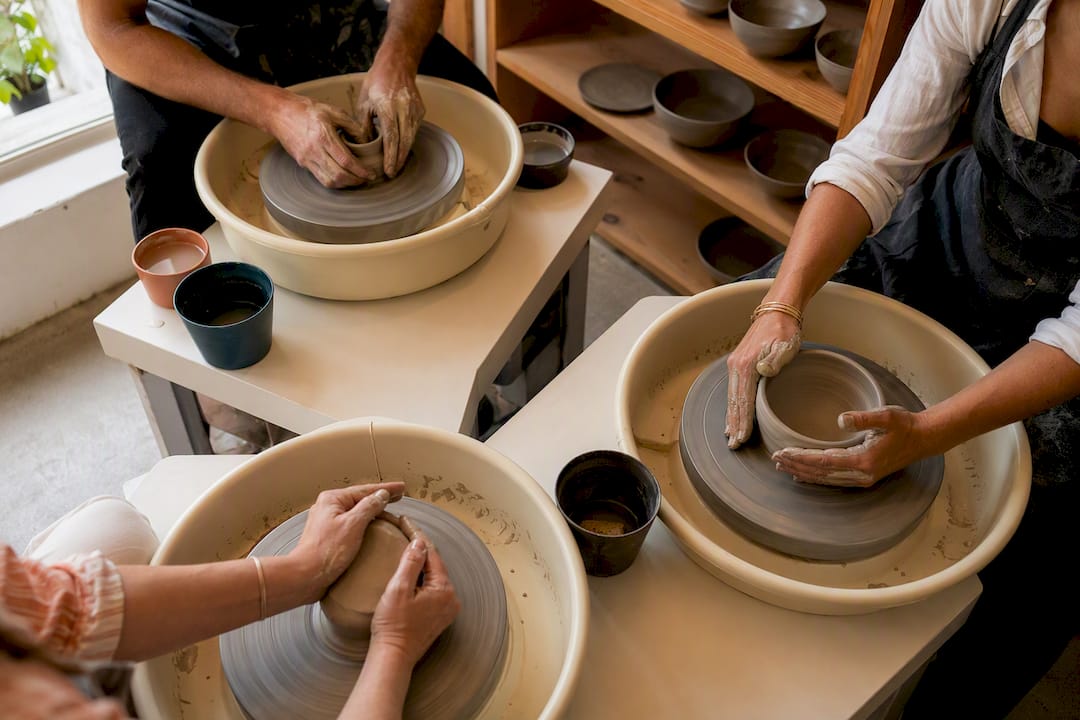
Waiheke Ceramics runs group pottery classes that work surprisingly well as a wine tour substitute activity. A 1.5-hour session runs around NZ$85 per person, and it gives a group something hands-on and memorable rather than just waiting out a storm indoors. Creative, class-based experiences like this often outperform a rushed extra vineyard stop, and travelers frequently underrate them until they’ve actually tried one.
Flow and Glow and similar wellness venues round out the island’s indoor activity options, giving couples or smaller groups a spa-focused alternative when the forecast rules out anything outdoors. It’s a different pace than wine touring, but it fills a rainy afternoon with something genuinely relaxing instead of something merely tolerable.
Most vineyards themselves also maintain indoor tasting rooms, which is worth remembering before you assume rain cancels the whole vineyard portion of your day. A quick phone call ahead of time can often convert an outdoor tasting into a sheltered one without losing the experience at all.
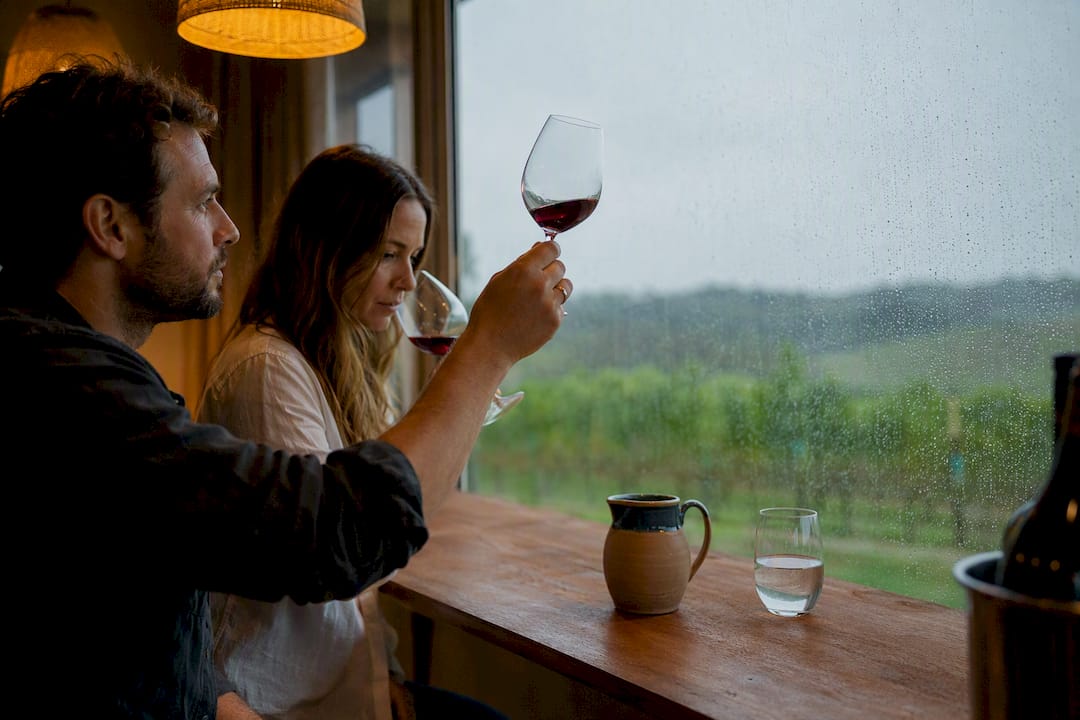
Pro Tip: Call ahead, not on the day. Venues like Wild Estate and Waiheke Ceramics can usually accommodate a same-day switch, but confirming an indoor seating or private class slot a day in advance guarantees you won’t be turned away when half the island has the same idea.
How to Plan Timing and Duration When Weather Is Uncertain
A typical door-to-door Waiheke wine tour runs several hours, and that window gets tight fast when weather forces changes. Building in flexibility from the start protects the parts of the day you care most about.
Add a 1 to 2 hour buffer to whatever the advertised tour length says. This absorbs a delayed ferry, a slower crossing, or extra time spent shifting to an indoor venue without wrecking the whole schedule.
Front-load indoor bookings. Schedule your first tasting or lunch at a venue with indoor capacity, then save outdoor viewpoints and open-air terraces for later in the day, once you’ve had a chance to see how conditions are actually shaping up.
Choose your transport style deliberately. Hop-on hop-off options give you flexibility to adjust your own pace, but a private transfer or small-group tour with a dedicated guide handles sudden itinerary changes far more smoothly, since one phone call reroutes the whole group instead of leaving everyone to figure it out separately.
Know what a late ferry means for your day. If your sailing runs late, call your operator immediately. Some providers, according to Terra & Tide’s terms, will meet a delayed group partway through the itinerary and pick up the tour at the first winery rather than cancelling outright. That’s worth confirming before you book if a shortened day would be a dealbreaker.
Packing and Safety Checklist for a Weather-Ready Wine Tour
What you pack matters almost as much as what you check on your phone. Waiheke’s weather can shift across a single afternoon, and a 40-minute ferry crossing in choppy conditions is a bad time to discover you left your jacket at the hotel.
A genuinely waterproof jacket, not just water-resistant, plus a warm mid-layer for wind on the ferry deck.
Closed, non-slip shoes. Vineyard paths and tasting room floors get slick fast in the rain.
A compact umbrella that survives wind gusts, since the flimsy kind turns inside out the moment you step off the ferry.
Seasickness tablets or patches if you’re at all prone to motion sickness, along with water to stay hydrated through the crossing.
Printed or saved digital copies of your ferry tickets and your operator’s contact number, in case signal drops or your phone battery gives up at the worst moment.
Follow winery staff instructions in wet conditions without exception. Vineyard paths, cellar stairs, and tasting room floors carry real slip risk after rain, and staff know exactly which areas need extra caution that day.
Why a Small-Group Local Operator Helps When Weather Goes Wrong
Weather doesn’t care about your itinerary, but the size of your tour group determines how fast anyone can actually respond to it. A coach of forty people can’t pivot in ten minutes. A group of six can.
Small-group tours capped at up to six guests make real-time adjustment possible. When a forecast turns, there’s no need to rebook a bus or renegotiate a dozen separate reservations. One phone call to a vineyard, one adjusted lunch reservation, one rerouted afternoon, and the day continues without anyone standing around waiting for a decision to filter down through layers of logistics.
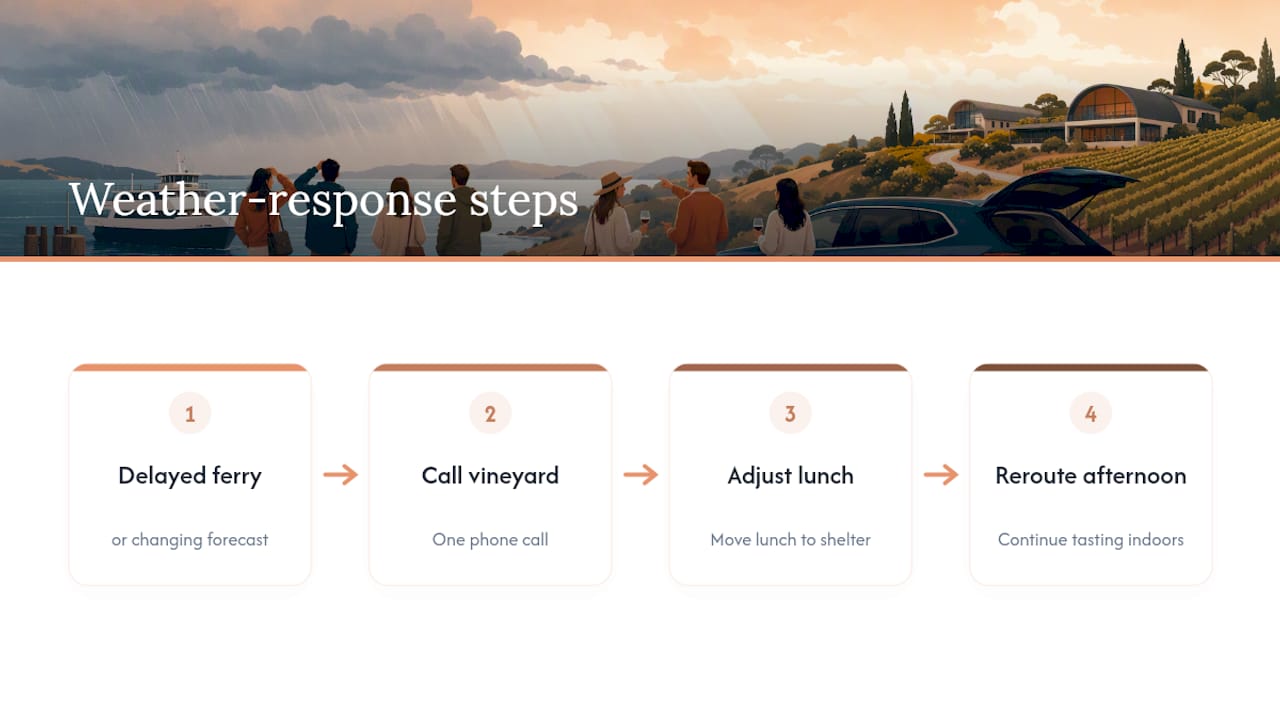
That flexibility shows up in concrete ways: shifting an outdoor tasting to a private indoor room at the same vineyard, moving lunch to a sheltered setting without losing the personal, unhurried pace of the day, or adjusting pickup and return times around a delayed ferry sailing rather than sticking rigidly to a printed schedule. Theitalianonwaiheke has documented exactly this kind of pivot during rainy Waiheke days, turning what could have been a washout into a full, unhurried food and wine experience for a small group.
Small groups also make winter and shoulder-season touring genuinely viable, not just tolerable. A detailed look at winter wine tasting on Waiheke walks through exactly how a compact group adapts its pace and venue choices when the weather isn’t cooperating, which matters if you’re planning a visit outside the peak summer months.
Turning Rain Into Part of the Story, Not a Ruined Day
Every operator talks about “rain or shine” policies. Fewer talk about what actually makes those policies work in practice, and the honest answer is group size. A rigid, oversized tour can promise flexibility on paper and still fail to deliver it on a wet Tuesday in July, simply because there are too many moving parts to redirect quickly.
The best wine days I’ve seen unfold on Waiheke in bad weather weren’t the ones where nothing went wrong. They were the ones where something shifted, an outdoor tasting moved inside, a ferry ran forty minutes late, and nobody in the group even noticed the scramble happening behind the scenes. That’s the real value of a small-group format: not that it prevents weather, but that it absorbs it.
If you’re planning a trip and the forecast looks uncertain, don’t cancel your plans and don’t grit your teeth through a compromised day either. Build in flexibility, pick an operator who can genuinely pivot, and treat the backup plan as part of the adventure rather than a failure of the original one. One caveat worth taking seriously: if a ferry operator or your tour company advises against travel on safety grounds, don’t push to board anyway. No tasting is worth that risk.
— Luca
Book a Weather-Aware Wine Day With Theitalianonwaiheke
Theitalianonwaiheke is built around exactly the scenario this article walks through: a small group, capped at six guests, that can shift from an outdoor vineyard terrace to an indoor tasting room or a private lunch setting without losing the personal pace of the day. Where a bigger coach tour has to stick to a fixed script regardless of what the sky is doing, a six-person tour can call ahead, rebook a table, and adjust timing around a delayed ferry without anyone left standing in the rain.
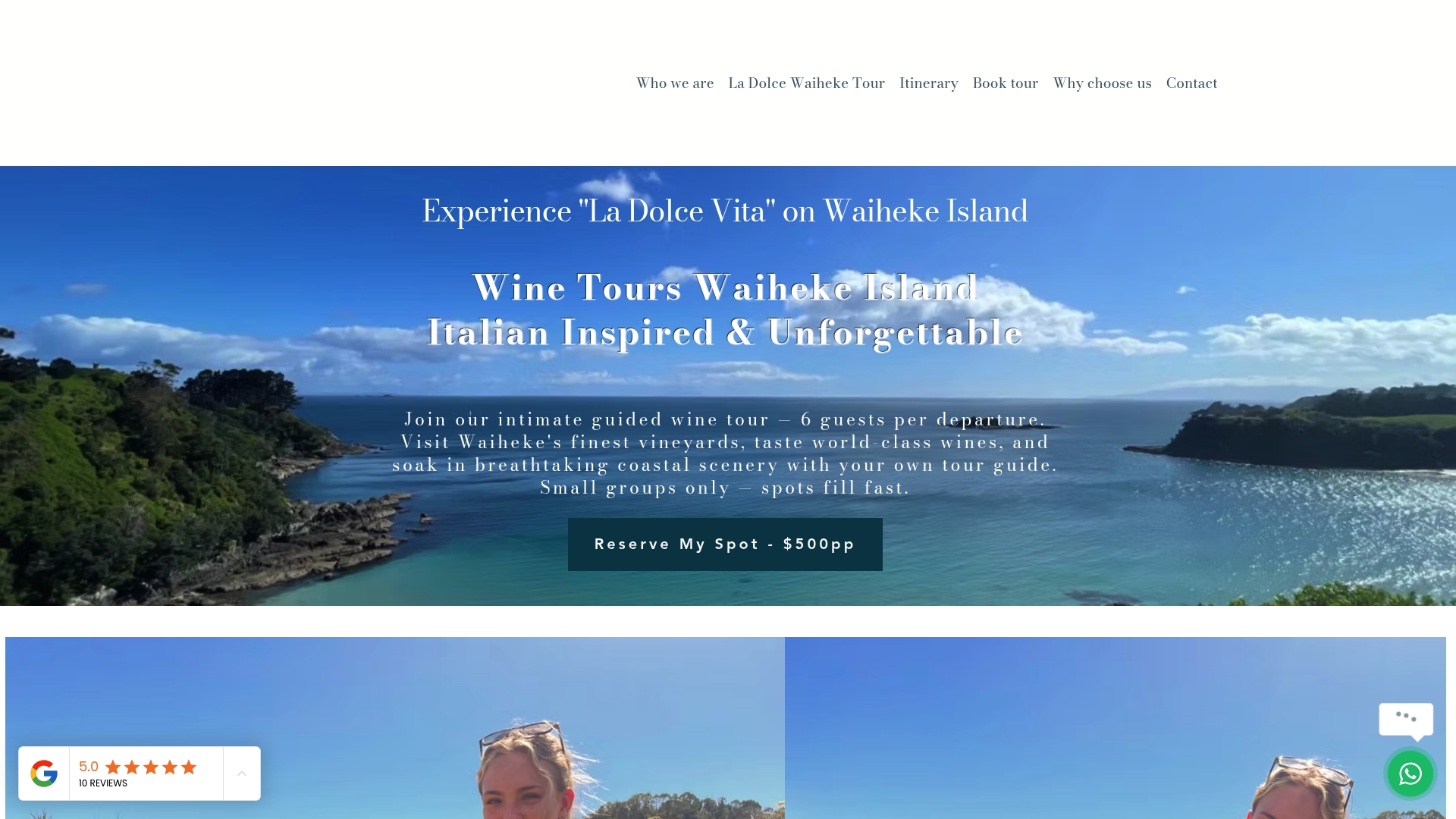
Before you reserve a date, check the operator’s rain policy directly and ask how re-sequencing works if the forecast turns. You can see how the luxury vineyard and gourmet dining experiences are structured, review tips on booking a Waiheke wine tour the right way, and when you’re ready, check availability and book your date online. A weather-ready day starts with the right group size, and it’s worth locking in early, especially through Waiheke’s wetter winter months.
Authority Links and Live Services to Check Before Your Trip
Bookmark these before you travel. They take less than five minutes to check and can save your entire day.
Ferry status: Fullers360 and Island Direct both post real-time sailing updates and cancellations.
Marine conditions: FerryWeather’s Hauraki Gulf tool and the MetService marine forecast cover wind, wave height, and visibility specific to the crossing.
Wet-weather venues: The Heke’s golf simulator bays, Wild Estate’s indoor tasting rooms, and Waiheke Ceramics’ pottery classes all take phone bookings for same-day rain switches.
If you want to understand why weather shapes a vineyard’s character in the first place, a taster’s guide to wine microclimates is worth a read before your trip, and if you’re curious how curated culinary days get designed around variable conditions more broadly, this guide to culinary experience design offers useful context.
Sources
FAQ
Can You Still Do a Wine Tour on Waiheke in the Rain?
Yes, most tours run in light rain, and many vineyards have indoor tasting rooms. The real risk to your day is ferry disruption from wind, swell, or fog, not the rain itself.
How Much Does a Wine Tour Cost on Waiheke Island?
Pricing varies significantly by operator, group size, and whether gourmet dining or private transport is included, so check individual operator sites for current rates rather than relying on a single average figure.
How Many Hours Do You Need on Waiheke Island for a Wine Tour?
A typical door-to-door Waiheke wine tour runs several hours, and it’s worth adding a 1 to 2 hour buffer if weather looks uncertain.
What Is the Best Wine Tour on Waiheke Island?
The best fit depends on group size and priorities, but small-group tours with six-person formats offer more flexibility to adapt quickly if weather or ferry conditions change mid-day.
Will My Ferry Get Cancelled If It’s Raining?
Rain alone rarely cancels a sailing. Cancellations typically come from strong wind, short choppy waves, or fog reducing visibility across the Hauraki Gulf, which is why checking marine forecasts matters more than checking whether it’s raining in Auckland.
Recommended
Comments