
Create Group Wine Tasting Notes: A Host's Copyable Template
- The Italian on Waiheke - Tours & Transfers

- 5 days ago
- 10 min read
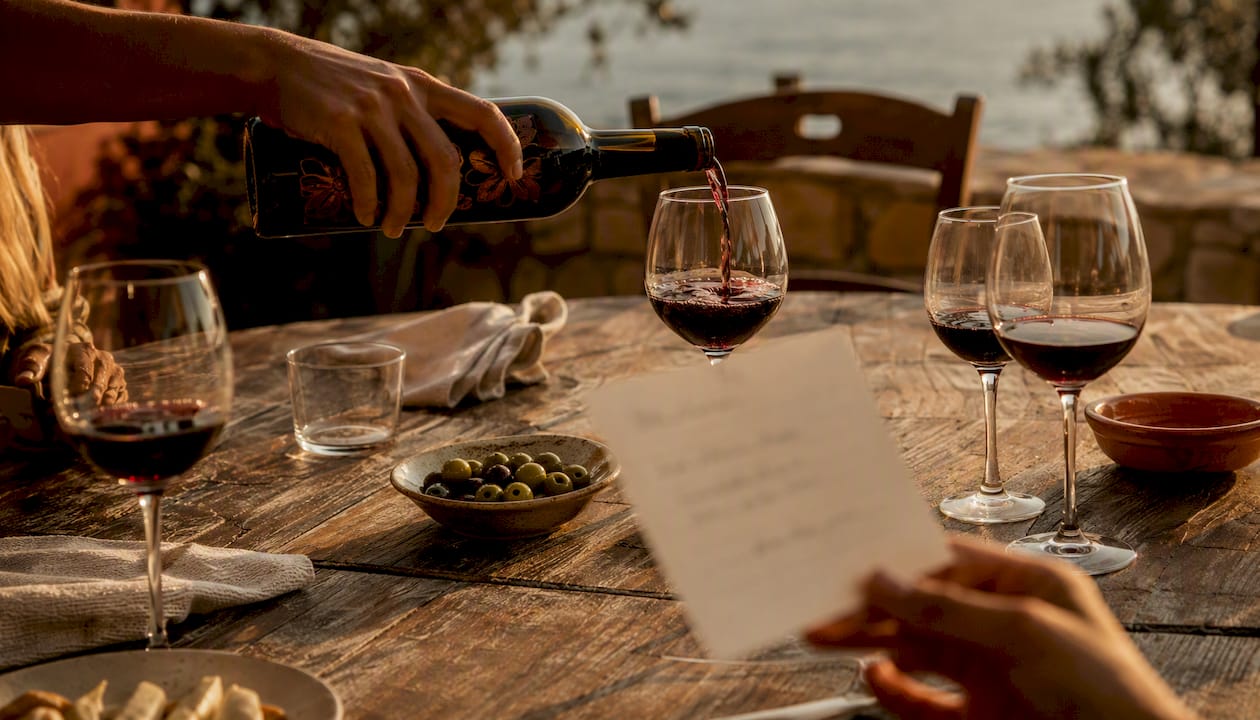
Here’s a template you can copy right now: Wine [number/name] — Producer, vintage, grape, region → Appearance (color, clarity) → Nose (three descriptors) → Palate (acidity, sweetness, tannin, body) → Finish (short/long, what lingers) → Group take (one sentence everyone agrees on). That single paragraph, filled in once per wine, is how you create group wine tasting notes that actually get read again later.
To put it to work fast:
Print one card per guest per wine, or build one shared digital form so notes land in a single spreadsheet automatically.
Decide up front whether notes stay anonymous (better for honest scores) or named (better for tracking who liked what).
Pour 1 to 1.5 ounces per taste and give everyone the same window, roughly 3 to 5 minutes, before moving to the next glass.
A printed card works best for dinner parties. A QR code linking to a Google Form suits larger or recurring groups. A shared spreadsheet wins when you’re comparing notes across multiple tastings over time.
Key Takeaways
A copyable template built around six fields, wine details, appearance, nose, palate, finish, and overall impression, is what turns scattered guest opinions into a usable group record.
Point | Details |
Use one template | Six fields (details, appearance, nose, palate, finish, impression) keep every guest’s note comparable. |
Limit flight variables | Cap core comparisons at four bottles and change one variable at a time for clearer differences. |
Sequence pours carefully | Serve sparkling and light whites before fuller whites and reds to protect palate sensitivity. |
Reconcile, don’t average | Log score splits and the reasoning behind them instead of flattening disagreement into one number. |
Let a guide handle it | Theitalianonwaiheke runs small-group tastings with professionally synthesized notes, so hosts can skip the setup. |
Table of Contents
How to Write Wine Tasting Notes Everyone Can Use
A usable tasting note has six parts, and skipping any one of them is why most group notes turn into a pile of vague adjectives nobody can compare later. Here’s what belongs on every card:
Wine details: producer, vintage, grape, and region. Write it before pouring for open tastings, or leave it blank until the reveal for blind ones.
Appearance: color and clarity. Example: “Pale straw, bright, no sediment.”
Aromas/nose: three descriptors, no more. Example: “Green apple, wet stone, a little honeysuckle.”
Palate/structure: acidity, sweetness, tannin, body. Example: “Zippy acid, bone dry, light body, no tannin to speak of.”
Finish: how long it lasts and what’s left behind. Example: “Short finish, citrus pith lingers.”
Overall impression/score: one sentence plus a number if you’re using one. Example: “Would drink again on a hot afternoon. 7/10.”
Guests who freeze up on “aromas” almost always loosen up when you swap the prompt to something concrete, which the next section covers. For blind tastings, pre-fill everything except wine details, and reveal that field only after every guest has submitted their note. That single rule protects your data from anchoring bias, where the first person to guess the producer accidentally shapes everyone else’s answer.
How Do You Design a Flight for Group Tasting?
The single biggest lever you have isn’t the notes template. It’s what you pour. A flight built around one clear variable (same grape, different regions; same producer, different vintages; same price point, different countries) gives guests something concrete to compare, and that’s what turns vague impressions into a real group discussion.
Here’s a quick checklist for building one:
Pick one variable to change. Everything else (grape, price bracket, or style) should stay roughly constant.
Cap the core flight at four bottles for groups under eight. Larger comparisons dilute attention and blur palates fast.
Sequence light to bold. Sparkling, then light whites, then fuller whites, then lighter reds before heavier ones, Pinot before Merlot before Cabernet.
Build in a palate reset. Plain water and bread between pours, not full snacks, so flavors don’t compound.
Pro Tip: If energy starts dragging around wine three, that’s usually a flight-length problem, not a group problem. Four wines keeps the room sharp; six starts losing people.
What Are the 5 S’s for Group Wine Tasting?
The classic tasting routine, Sight, Swirl, Smell, Sip, Savor, maps cleanly onto your note card if you give each step a specific, low-pressure prompt instead of asking guests to sound like sommeliers.
Sight. Hold the glass against something white and describe color and clarity. Prompt: “What color would you paint this?”
Swirl. A gentle circular motion releases aroma compounds. Prompt: “Does the smell change after swirling?”
Smell. Nose deep into the glass before sipping. Prompts: “What does this remind you of?” “Fruit, flower, or something else entirely?” “Pick three words, don’t overthink it.”
Sip. Let the wine sit on the tongue for a second before swallowing. Prompts: “Is it dry or sweet?” “Does your mouth pucker (tannin) or water (acid)?”
Savor/Summarize. Note the finish and land on one group-friendly sentence. Prompt: “Would this fit better at a barbecue or a candlelit dinner?”
That last prompt does more work than it looks like it should. Asking “which moment would this wine fit best?” gets a shy first-timer talking just as easily as it gets a longtime collector talking, because there’s no wrong answer.
Here’s what that looks like filled in:
Notice none of those notes use technical jargon. They use comparisons a friend would actually say out loud, which is exactly why they’re easier to write, easier to read back, and easier to compare across six different guests’ handwriting.
Which Format Works Best for Collecting Group Notes?
A single printed card per wine, with generous white space under each prompt, beats a dense form every time. Guests write more when they’re not squinting at six cramped boxes. A good layout: wine name and producer at the top (blank if blind), then four short lines for nose, palate, finish, and overall take, with at least an inch of blank space per section.
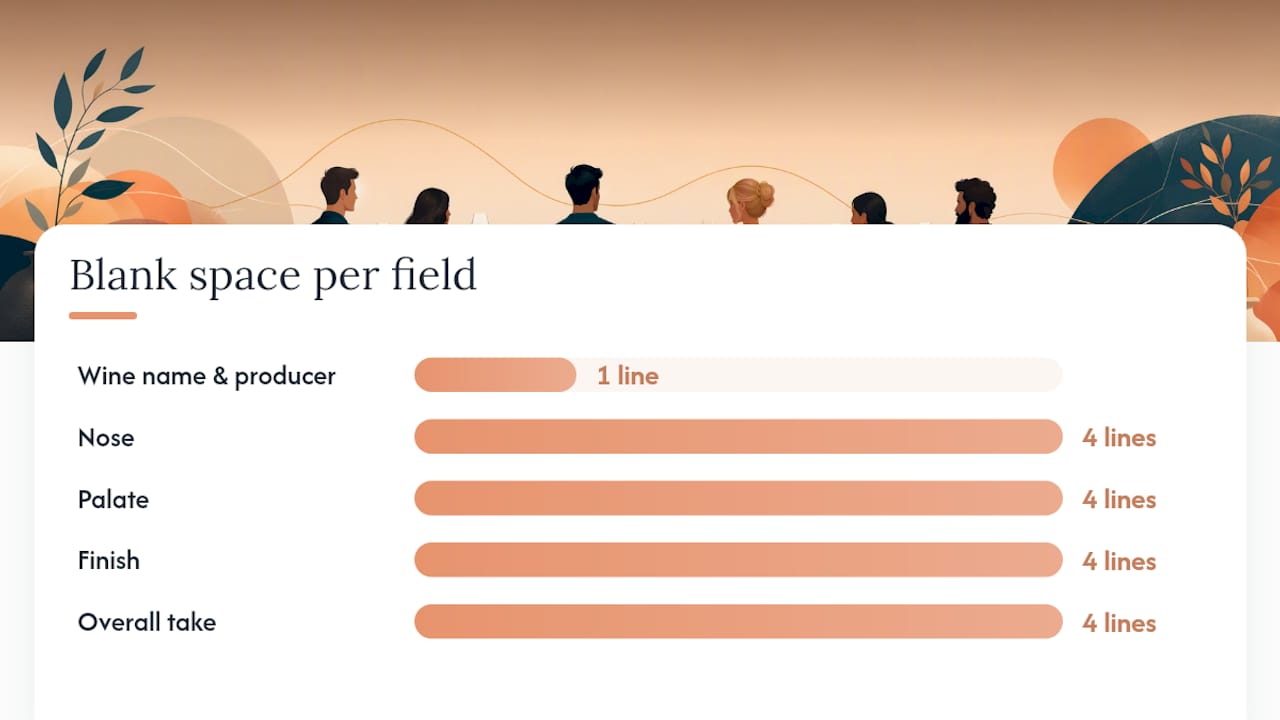
For a lower-effort digital option, a QR code on each table linking to a short form takes guests fifteen seconds to fill out per wine, and some hosts use QR forms specifically to aggregate every guest’s short note into an instant group summary the moment the tasting wraps. A good form asks for: wine number, three aroma words, palate note, finish note, one-line overall take, and a 1 to 10 score.
Synthesizing afterward is mostly pattern matching:
Group similar descriptors together (“citrus,” “lemon,” and “green apple” often describe the same acid-forward character).
Where scores diverge sharply, note the split rather than averaging it away. A 9 and a 4 on the same wine is more interesting than a flattened 6.5.
Write one paragraph per wine summarizing the room’s consensus, plus any strong minority opinion worth remembering.
Timing-wise, budget 12 to 15 minutes per wine including the palate reset, which puts a four-wine flight at roughly 60 to 90 minutes total, comfortable pacing without anyone rushing their notes.
What Does a Professional Tasting Facilitator Do Differently?
At a guided small-group tasting, the host typically opens with the theme in one sentence (say, three Chianti producers, same vintage, different hillsides) before anyone tastes a drop. That framing alone changes what guests write, because they’re now comparing against something specific instead of guessing blind.
A facilitator usually splits the workload across a few roles:
Pourer: controls portion size and pacing so nobody’s rushed or left waiting.
Timekeeper: keeps each wine to its window so the group stays synced.
Note synthesizer: collects cards or form entries and drafts the group summary afterward.
Conversation prompter: throws out the “what moment does this fit” style questions when the room goes quiet.
The Italian on Waiheke runs exactly this kind of format on its guided tours, keeping groups to six people so every guest actually gets heard.
Pro Tip: If you’re hosting solo, combine timekeeper and pourer. Never combine pourer and note synthesizer. You’ll miss too much conversation.
Guidance on Preparing Participants With Basic Wine Knowledge
You don’t need a room full of sommeliers to get good notes. You need guests who know roughly what to look for before the first pour hits the glass. Five minutes of setup beats a confused hour of note-taking.
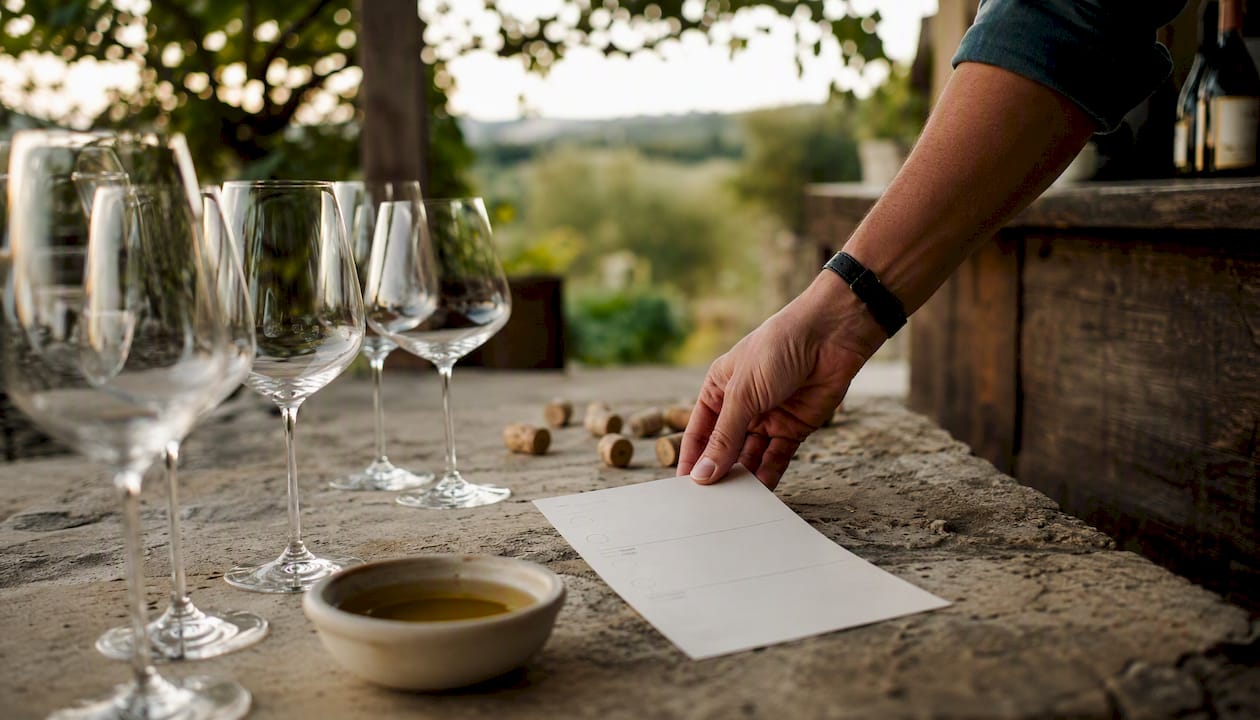
Before you start, cover three things out loud: what the five tasting steps mean, what the four palate categories (acidity, sweetness, tannin, body) actually feel like, and what a “finish” is. A quick trick that works well: acidity is the mouthwatering feeling, tannin is the drying feeling on your gums, and body is whether the wine feels like skim milk or whole milk in your mouth. Those comparisons stick far better than technical definitions.
Hand out the tasting card before you explain anything, so guests can follow along visually as you talk through each field. If you’re running a blind tasting, tell people that up front, it changes how carefully they read the appearance and nose sections, since they can’t lean on label knowledge as a shortcut.
One thing worth mentioning before anyone sips: serving temperature affects perception more than most casual tasters realize. A white served too cold mutes its aroma; a red served too warm can taste hot and unbalanced. If your bottles have been sitting out, give guests a heads-up that the first impression might shift as the wine warms in the glass, or vice versa if it’s still cold from the fridge. That small caveat prevents a lot of unfair first-wine scores.
How Do You Handle Disagreement in a Wine Tasting Group?
Two guests will taste the same wine and walk away with opposite opinions, and that’s not a flaw in your tasting, it’s the entire point. Palates differ. Someone with a stronger tolerance for tannin will call a wine “smooth” while someone else calls it “harsh,” and both are telling the truth about their own experience.
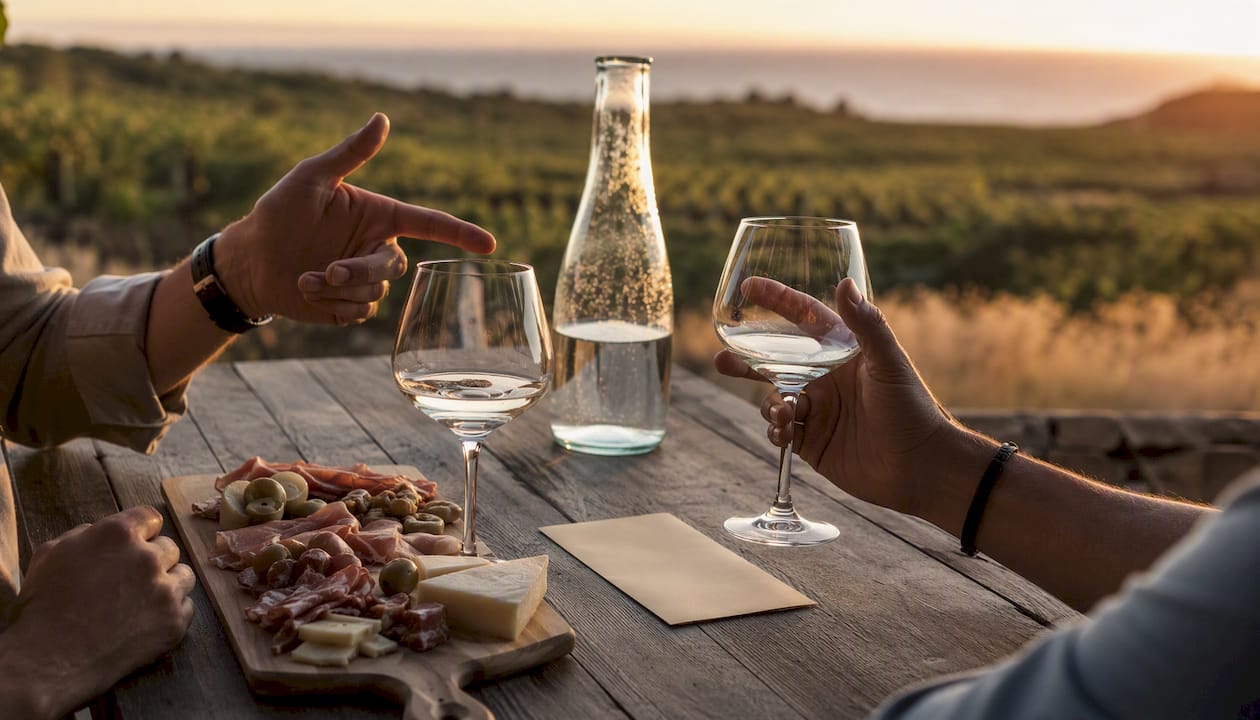
The move that keeps this productive: ask “what specifically made you feel that way” instead of “who’s right.” That question turns a disagreement into a description. “Harsh” becomes “the tannin grips the back of my tongue,” which is now a data point everyone can use, rather than a verdict that shuts the conversation down.
Score spreads are useful information, not a problem to smooth over. If one guest gives a wine a 9 and another gives it a 4, write down both numbers and a half-sentence on why, rather than averaging them into a forgettable 6.5. That split is often the most interesting line in your entire tasting record.
Keep an eye on group dynamics, too. If your most experienced taster starts describing wines in technical language first, quieter or newer guests will often just agree rather than risk sounding wrong. A simple fix: ask newcomers to write and submit their note before the group discusses each wine out loud. Comparing notes after everyone has committed to paper protects honest, independent impressions, exactly the kind of raw material a good group summary is built from.
What’s the Best Way to Store Group Tasting Notes for Later?
The easiest system is also the most durable one: one shared spreadsheet, one row per wine per tasting, with columns for date, wine details, average score, and a synthesized one-line summary. Add a tab per event and you’ve got a running record you can search by grape, region, or date months later when someone asks “what was that Syrah we all loved in March?”
If you’re collecting notes via QR form, most form tools export straight to a spreadsheet automatically, meaning your capture and your archive are the same system with zero extra data entry. If you’re on printed cards, photograph each one before guests take them home, or type up the group summary within a day while the tasting’s still fresh. Waiting a week is how you lose the good half-sentence someone said about the second wine.
For hosts running recurring tastings, whether monthly with the same friend group or as part of a team-building series, experiencias vinícolas en un viaje de golf a Madrid con carácter tend to produce more comparable records over time than ad hoc gatherings, simply because the same fields get filled out the same way every session. Consistency in the template matters more than the sophistication of the storage system.
Keep a simple naming convention (date plus theme) on every file or spreadsheet tab, and you’ll thank yourself the first time you want to recreate a flight that worked particularly well.
Why Discovery Beats Scoring in a Group Tasting
The best group tasting notes read like a shared story, not a scorecard. A room chasing precise ratings tends to go quiet fast; a room asked “what moment does this wine belong in” keeps talking, and that conversation is what people actually remember a year later. Score if you want, but let the story lead.
Skip the Planning and Just Book the Tasting
If all this flight-building and note-synthesizing sounds like more setup than you want for a Friday night, that’s exactly what a guided experience solves. Theitalianonwaiheke runs small-group tastings, capped at six guests, where the host does the flight design, the pacing, and the note synthesis for you, so you and your group just show up and taste.
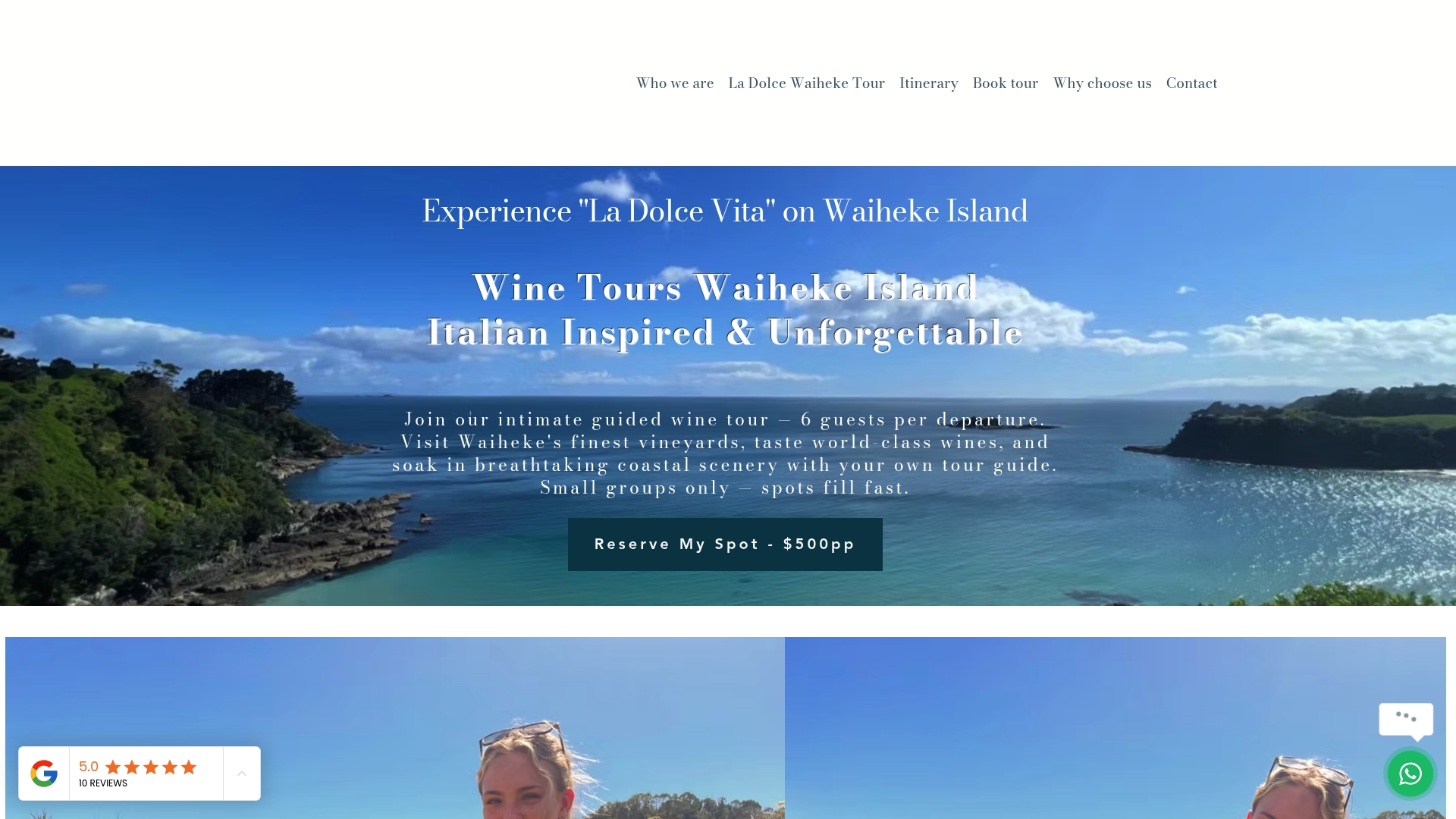
Every tour pairs boutique vineyard visits with gourmet local dining, and the personalized, small-group format means the guide adjusts the theme and pacing to who’s actually in the group, rather than running a fixed script for forty people. If you’d rather spend the evening tasting than typing up a spreadsheet afterward, book your date online and let someone else handle the logistics.
Frequently Asked Questions
What’s the fastest way to create group wine tasting notes without overcomplicating it? Copy the six-field template at the top of this article onto index cards or a shared Google Form. That alone covers wine details, appearance, nose, palate, finish, and overall impression, which is every field a comparable group note needs.
How many wines should a group tasting include? Four bottles works best for groups under eight, since it keeps palates sharp and energy high. Larger parties can stretch to five or six if you build in longer palate breaks.
Should tasting notes be anonymous or signed? Anonymous notes usually produce more honest scores, especially in mixed-experience groups where newer tasters might otherwise just agree with the loudest opinion in the room. Signed notes work better if you want to track individual preferences across multiple tastings.
What if my group can’t agree on how a wine tastes? Disagreement is normal and often the most useful part of the note. Ask each guest what specific detail led to their impression, log both scores, and treat the split as information rather than a problem to resolve.
How do I turn individual notes into one group summary? Group similar descriptors together, note where scores diverge and why, and write one sentence per wine capturing the room’s general take plus any strong minority view. That’s your group record for the event.
Sources
Recommended
Comments