
Unique Group Bonding Experience Ideas That Actually Work
- The Italian on Waiheke - Tours & Transfers

- 7 hours ago
- 13 min read
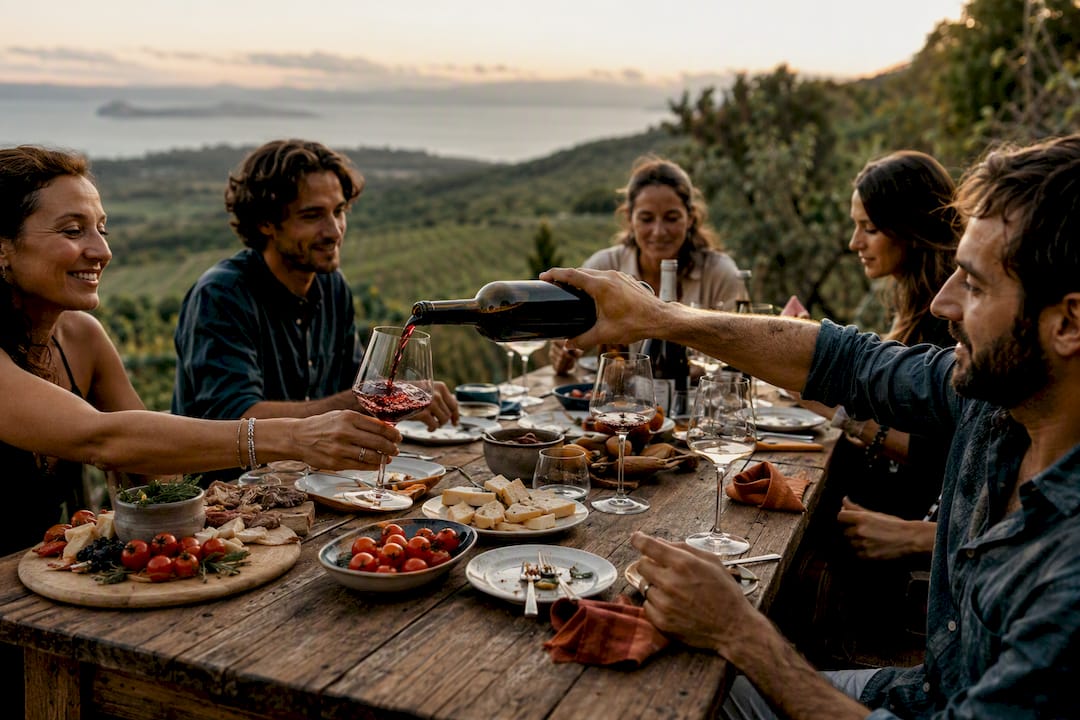
Hands-on creative workshops, intimate culinary experiences, immersive problem-solving challenges, low-stakes social crafts, and well-designed virtual formats consistently produce the strongest unique group bonding experience ideas available today. They work for one simple reason: they strip away work pressure and replace it with a shared sensory or creative focus, which gets people talking without anyone having to perform.
If you need a starting point right now, pick from these five category winners:
Creative workshops — pottery, mosaic making, or a personalized t-shirt appreciation session where you design something for a colleague
Culinary and sensory experiences — guided wine tasting, chef-led cooking class, or mixology session
Immersive challenges — a themed escape room or a low-stakes “build and present” design sprint
Outdoor adventure — a scavenger hunt with photo tasks or a guided nature walk with sensory prompts
Virtual or hybrid — a mailed cocktail or craft kit paired with a synchronous video session
Success looks the same across all five: a tangible keepsake, a shared sensory anchor everyone experienced together, and a short structured reflection at the end that turns the moment into a memory people actually reference later.
Key Takeaways
Unique bonding happens fastest through small-group, hands-on formats that pair a shared sensory or creative task with a short structured debrief afterward.
Point | Details |
Pick by goal first | Match the activity to trust building, celebration, or reconnection before picking a category. |
Keep groups small | Six to ten people gives everyone more airtime and builds trust faster than larger groups. |
Debrief every time | A five to ten minute structured reflection turns an event into a lasting shift in team dynamics. |
Adapt for scale | Use parallel stations for large groups and mailed kits with a facilitator for remote teams. |
Book it done for you | Theitalianonwaiheke offers a guided small-group wine and culinary experience capped at six guests as a ready-made bonding format. |
Table of Contents
Unique bonding experience ideas organized by category
Most “team building” lists are just recycled trust falls with new names. The categories below are different because each one gives participants a reason to reveal something about themselves without asking them to.
Creative workshops
1. Graffitee-style personalized t-shirt appreciation. Each person designs a t-shirt for a colleague, drawing on inside jokes, shared memories, or something they admire about that person, then presents it to them at the end. This appreciation format produces genuinely personalized keepsakes and deepens interpersonal connection because it forces people to articulate what they value in someone else, out loud, in front of the group.
Why it bonds: Structured appreciation exercises build psychological safety faster than competitive games.
Who it suits: Teams that already know each other a bit but rarely say anything kind out loud.
Logistics: 60 to 90 minutes, fabric markers or iron-on transfers, works for a small group.
Run tip: Assign pairs randomly so people design for someone outside their usual clique.
2. Pottery or ceramics session. Wheel throwing or hand-building with clay works because it’s genuinely hard at first, and watching each other fail a little levels the room fast. Nobody in a pottery class is the “expert” from the boardroom.
Why it bonds: Shared struggle with a new physical skill removes hierarchy.
Who it suits: Small groups, 4 to 10 people, especially ones with a wide age or seniority range.
Logistics: 90 minutes to 2 hours, needs a studio with wheels or hand-building tables.
Run tip: Skip the glazing and firing step if you’re short on time. The making is where the bonding happens.
3. Mosaic lamp or tile making. Slower and quieter than pottery, this suits groups that want conversation more than physical activity. People sit at a table for two hours arranging tiles and talking, which turns out to be an underrated bonding format.
Why it bonds: Hands-on creative sessions that produce a tangible takeaway are more memorable than purely game-based activities, and this one leaves everyone with a lamp they’ll actually use.
Who it suits: Groups who dread “forced fun” and want something closer to a craft night.
Logistics: 2 to 3 hours, tile kits per person, low physical demand.
4. Collaborative mural or textile project. One large piece, built by everyone, that stays in the office or common space afterward. Assign sections, or let people paint anywhere they want and blend the seams together at the end.
Why it bonds: The finished piece becomes a permanent, visible reminder of the day.
Who it suits: Larger groups, 15 to 40 people, especially teams that share a physical workspace.
Logistics: Half a day, needs a facilitator to manage paint stations and prevent one person from dominating the wall.
Culinary and sensory experiences
5. Guided small-group wine tasting with shared courses. A sommelier or guide walks a group through several wines paired with food, explaining what to notice in each glass. The structure matters more than the alcohol. Small, facilitated culinary and wine experiences work especially well for mixed-experience groups because the sensory focus lowers social pressure and gives people something neutral to react to before conversation drifts to anything personal.
Why it bonds: Nobody has to perform. Everyone is just noticing the same taste at the same time.
Who it suits: Groups of 4 to 8 who want depth over novelty.
Logistics: 2 to 3 hours, best with a guide who narrates rather than lectures.
Run tip: Ask each person to describe one wine before the guide gives the “correct” tasting notes. Wrong guesses get more laughs than right ones.
6. Collaborative chef-led cooking class. Groups split into stations, each responsible for one course, then everyone sits down to eat what they made together. This one has an actual finish line, which most team activities lack.
Why it bonds: A culinary experience directs attention through taste, smell, and texture rather than through talk, which lowers the pressure to make conversation and lets it happen naturally instead.
Who it suits: Groups of 6 to 16, split into cooking teams of 3 to 4.
Logistics: 2.5 to 3.5 hours including the meal.
7. Private mixology session. A bartender teaches the group to make two or three cocktails, with a light competitive element (best presentation, best original name) that stays low stakes because nobody’s job depends on the outcome.
Who it suits: Social groups more than formal work teams, though it works for both.
Logistics: 90 minutes, needs a private space and a licensed instructor.
8. Communal foraging and cook-up. Where available, a guided walk to gather herbs, mushrooms, or seasonal produce followed by cooking the haul together. Rarer to find, but the novelty alone generates conversation for weeks after.
Who it suits: Outdoorsy groups of 6 to 12 who want something genuinely unusual.
Immersive and problem-solving experiences
9. Themed escape rooms with a custom debrief. The room itself is table stakes at this point. What separates a forgettable escape room from a genuinely bonding one is a facilitator who runs a short debrief afterward asking what role each person naturally took on.
Why it bonds: Time pressure surfaces real behavior patterns fast.
Who it suits: Groups of 4 to 8 per room, scalable to multiple rooms for larger teams.
Run tip: Ask “who became the leader without anyone deciding that?” in the debrief. It’s almost always the most interesting five minutes of the whole session.
10. Immersive role-play mystery evening. Each participant gets a character and a set of secrets, and the “mystery” unfolds through conversation over a meal. Slower than an escape room, more theatrical, and better suited to groups who already like each other and want a fun evening rather than a challenge.
Who it suits: 8 to 16 people, ideally with a facilitator running the plot.
11. Low-stakes design sprint or “build and present” challenge. Give small teams a genuinely silly brief (design a product for left-handed astronauts, pitch a theme park for pets) and 45 minutes to build something with craft supplies, then present it. The absurdity is the point. It removes the fear of a bad idea because there’s no such thing as a bad idea for a pet theme park.
Why it bonds: Shared creative constraints force fast collaboration without the stakes of real work.
Who it suits: Groups of 8 to 30, split into teams of 4 to 6.
Outdoor and adventure experiences
12. Scavenger hunts with photo tasks. Teams get a list of odd, specific photo challenges scattered across a neighborhood or venue, and a time limit. Works well because it forces navigation decisions and small disagreements that resolve themselves quickly and harmlessly.
Who it suits: Larger, mixed-energy groups, 10 to 50 people.
Logistics: 90 minutes to 2 hours, needs a defined boundary and a shared photo submission app or group chat.
13. Low-intensity field days with cooperative challenges. Not the competitive tug-of-war version. Think relay-style tasks that require two people to solve something together, like carrying an egg on a spoon while blindfolded and directed by a partner.
Who it suits: Groups who want to be active but not sweaty or humiliated.
14. Guided nature experiences with sensory prompts. A walk with a guide who periodically stops the group and asks everyone to name a smell, a sound, or a texture they notice. It sounds almost too simple, but shared attention to the same small detail creates surprisingly quick rapport.
Who it suits: Any group size, especially ones burned out on screens and meetings.
Low-stakes social crafts and keepsakes
15. Postcard swap. Everyone writes a postcard to a colleague they don’t know well, drops it anonymously, and the group reads a few aloud (with permission). Costs almost nothing and takes 20 minutes, but it’s one of the highest-return activities on this entire list for the time invested.
16. Appreciation-letter workshop. A slower, more private version of the postcard swap. Each person writes a short letter to someone on the team, sealed and delivered later rather than read aloud. Better for teams that find public sharing uncomfortable.
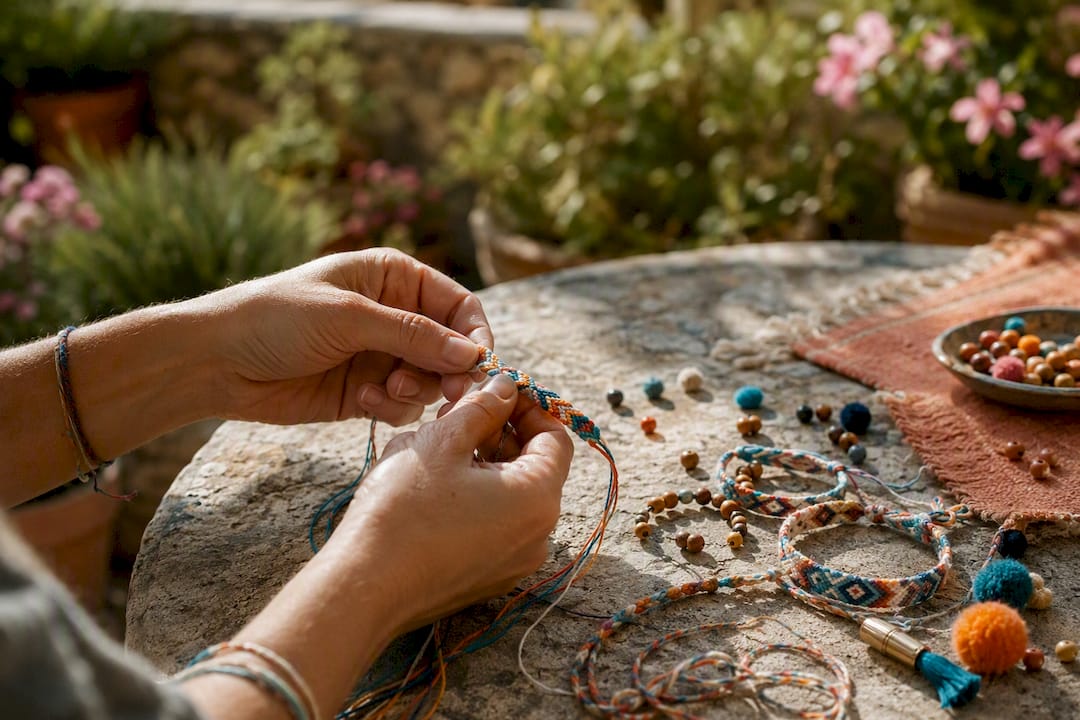
17. Wearable-keepsake creation. Friendship bracelets, custom pins, or small jewelry-making stations. Sounds juvenile until you notice how many people still wear the thing six months later.
Virtual and hybrid experiences
18. Mailed cocktail, cooking, or craft kits. Everyone gets an identical box shipped ahead of time, then joins a synchronous video call where a host walks the group through making the same thing at the same time. The shared physical object in everyone’s hands is what makes this work better than a generic Zoom happy hour.
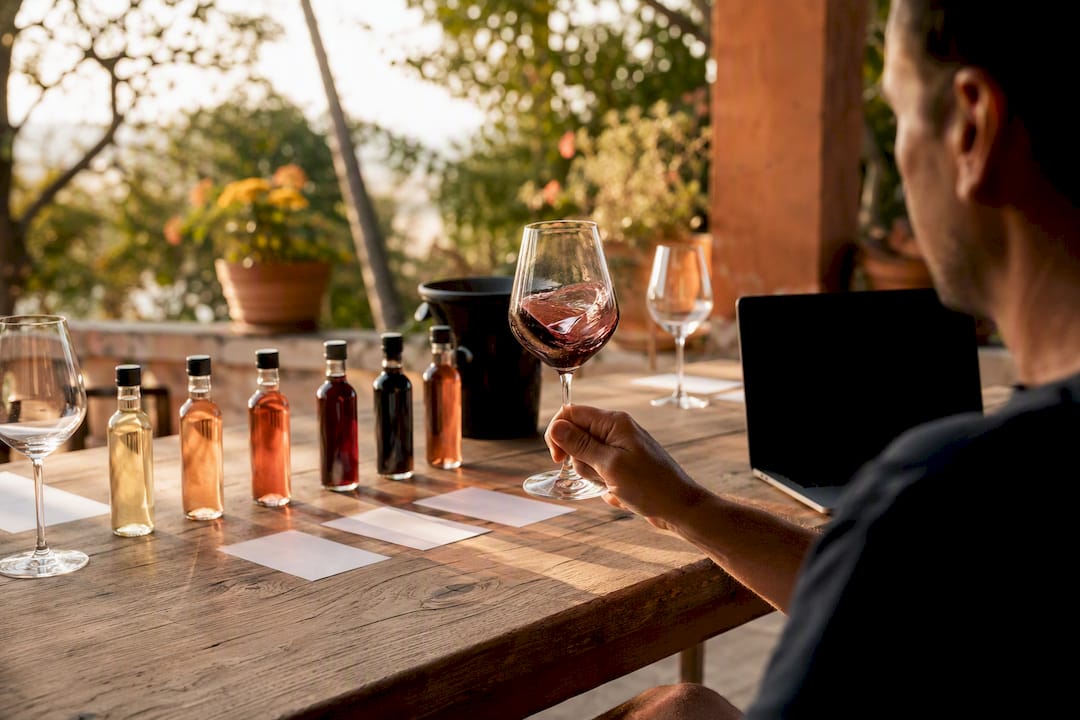
19. Synchronous guided tasting with couriered samples. A wine, coffee, or chocolate tasting run over video, with identical samples mailed to each participant in advance so everyone tastes the same thing on the same schedule. Programs that pair a remote ritual like this with occasional in-person events tend to build stronger long-term trust than either format alone, since the in-person events do the deep bonding and the remote sessions keep that connection warm between them.
20. Remote storytelling workshops. A facilitator prompts each person to tell a two-minute story from a shared theme (a travel disaster, a first job, a proud failure). Works surprisingly well on video because the format gives quiet people a clear, bounded turn to speak.
How to pick the right activity for your group
Skip the “top 10 team building ideas” scroll and answer four questions in order instead.
Step 1: Name the actual goal. Are you trying to build trust after a rocky quarter, celebrate a win, or just get a distributed team to recognize each other’s voices? A trust-repair session and a celebration need completely different formats. Picking based on “what’s popular” instead of the goal is the single most common planning mistake.
Step 2: Match format to goal. Trust and vulnerability goals point toward creative workshops and appreciation exercises, where structured formats that ask people to create something for a colleague accelerate psychological safety faster than competitive formats do. Celebration goals point toward culinary experiences or mixology sessions. Getting a large, energetic group to loosen up points toward scavenger hunts or field days.
Step 3: Check logistics and accessibility. This is where good ideas die in execution. Confirm:
Mobility requirements (can everyone participate in a walking scavenger hunt or a pottery wheel session?)
Dietary restrictions for any culinary or wine experience, confirmed in advance, not at the table
Alcohol-free alternatives for mixology or tasting sessions
Budget per head, including any travel or venue cost
Time of day that doesn’t punish caregivers or people with long commutes
Step 4: Plan the debrief before the event, not after. A great activity with no reflection afterward is just a nice afternoon. A great activity with five minutes of structured reflection becomes a story people tell for years.
Pro Tip: Match energy level to group size before anything else. A quiet, intimate creative workshop with 30 people falls flat because half the room can’t hear or participate. A high-energy scavenger hunt with 6 people feels thin because there’s no crowd to generate momentum.
Adapting ideas for small groups, big teams, and remote crews
Group size changes almost everything about which idea works, and pretending one format scales cleanly from 6 people to 60 is where most planning goes wrong.
Six to ten people is the sweet spot for genuine connection. At that size, everyone gets meaningfully more airtime and trust builds faster than in larger groups, because nobody can quietly opt out. Pottery, wine tasting, cooking classes, and appreciation workshops all perform best right in this range.
For larger groups, don’t just scale the same activity up. Run parallel stations instead:
Split into breakout groups of 6 to 8 doing the same creative task simultaneously, then reunite for a shared reveal or presentation
Use paired rotations for scavenger hunts so small teams compete against each other rather than dissolving into one unmanageable mob
Close with one whole-group moment (a photo wall, a round of short presentations) so the event still feels unified
For virtual and hybrid teams, the playbook is different again. Mail identical kits ahead of a synchronous session so everyone has the same physical object in hand. Assign a clear facilitator role, someone whose only job is managing turn-taking on video, because remote sessions fall apart fast without one. And don’t try to replace in-person bonding entirely. A steady cadence of short virtual rituals paired with occasional in-person events tends to outperform either approach alone.
Making the bonding last after the event ends
The activity is only half the job. What happens in the last ten minutes decides whether people remember it as a nice afternoon or a genuine shift in how the team works.
Three debrief formats cover most situations:
Round-robin appreciation. Each person names one thing they noticed or appreciated about someone else during the activity. Keep it to one sentence per person so it doesn’t drag.
Structured reflection prompts. Ask three fixed questions: What surprised you? What did you learn about someone else? What do you want to do differently at work because of today? Facilitator guidance on debrief prompts like this is what separates a well-run activity from a forgettable one.
“One action I’ll try.” Each person commits, out loud, to one small behavior change for the coming week. It’s the least comfortable of the three formats and the one that actually changes behavior.
Tangible takeaways extend the effect well past the event itself. A printed photo album on the office wall, a t-shirt someone actually wears, a team charter drafted from the day’s reflection prompts, keeps the bonding visible instead of letting it fade into a vague memory of “that fun day we had.”
Measure success simply: do people reference the event unprompted a month later? Did anything about how the team communicates actually shift? If the answer is no both times, vary the format next round rather than repeating what didn’t land.
Point | Details |
Debrief within the hour | Reflection loses its effect if delayed to the next day or skipped entirely. |
Keep prompts to three | More than three questions turns reflection into homework and kills momentum. |
Send takeaways home | A photo, letter, or keepsake apparel keeps the memory active for weeks. |
What a guided wine and culinary experience teaches about bonding
A small-group wine and food experience works as a bonding format because it removes the two biggest obstacles to real conversation: performance pressure and silence. Theitalianonwaiheke runs its tours capped at six guests specifically because that ceiling keeps every guest talking to the guide and to each other, rather than splitting into side conversations that leave half the group out.
The mechanics matter more than they seem to. A guide walking a small group through several boutique vineyards gives everyone the same sensory reference point at the same moment, a specific wine, a specific view, a specific dish, which gives conversation somewhere neutral to start before it drifts into anything more personal. Storytelling from a guide who knows the local wine culture and its history adds context that turns a tasting into something closer to a shared story than a checklist of stops.
A group of six strangers or coworkers, guided through several courses and pours over three or four hours, with nowhere else to be and nothing to perform, tends to end the day talking like people who’ve known each other far longer than they have.
What to tell your group before booking something like this:
Group size caps around six keep the experience intimate; larger teams should split into multiple small tours rather than one oversized group
Timing runs several hours, so plan the day around it rather than squeezing it between meetings
Dietary needs should be flagged in advance so the gourmet dining component can be adjusted without disrupting the flow
Transport and logistics are handled by the guide, which removes the one variable most likely to stress a group outing before it even starts
What actually matters here, and what doesn’t
Most advice on this topic obsesses over novelty, the weirder the activity, the better, as if bonding is a function of surprise. It isn’t. The escape room and the scavenger hunt and the pottery class all work for the same underlying reason: they give people a shared task with no professional stakes attached to the outcome. Novelty helps people show up. It’s the low stakes that make them stay open.
The advice I’d push back on hardest is the assumption that bigger, louder, more elaborate events produce better bonding. They usually produce better photos. A field day for 80 people generates energy, not connection, because most of those 80 people never actually talk to each other. If real connection is the goal rather than a fun afternoon, six to ten people beats sixty almost every time, and a quiet cooking class or wine tasting will outperform a flashy adventure course.
If you take one thing from this list, take the debrief. Skipping it is the most common and most costly mistake in the entire category. Ten unstructured minutes of reflection at the end of any activity does more for lasting connection than switching to a fancier venue ever will.
— Luca
Book a guided small-group experience instead of planning one yourself
If you’d rather skip the venue-hunting, the dietary-restriction spreadsheets, and the “what happens if it rains” logistics, Theitalianonwaiheke handles all of it as a single booked experience built specifically for the intimate, sensory bonding this article describes. Groups stay capped at six, which means your team gets the same trust-building benefit that small-group formats deliver everywhere else on this list, without you having to design the activity, brief a facilitator, or plan a debrief yourself.
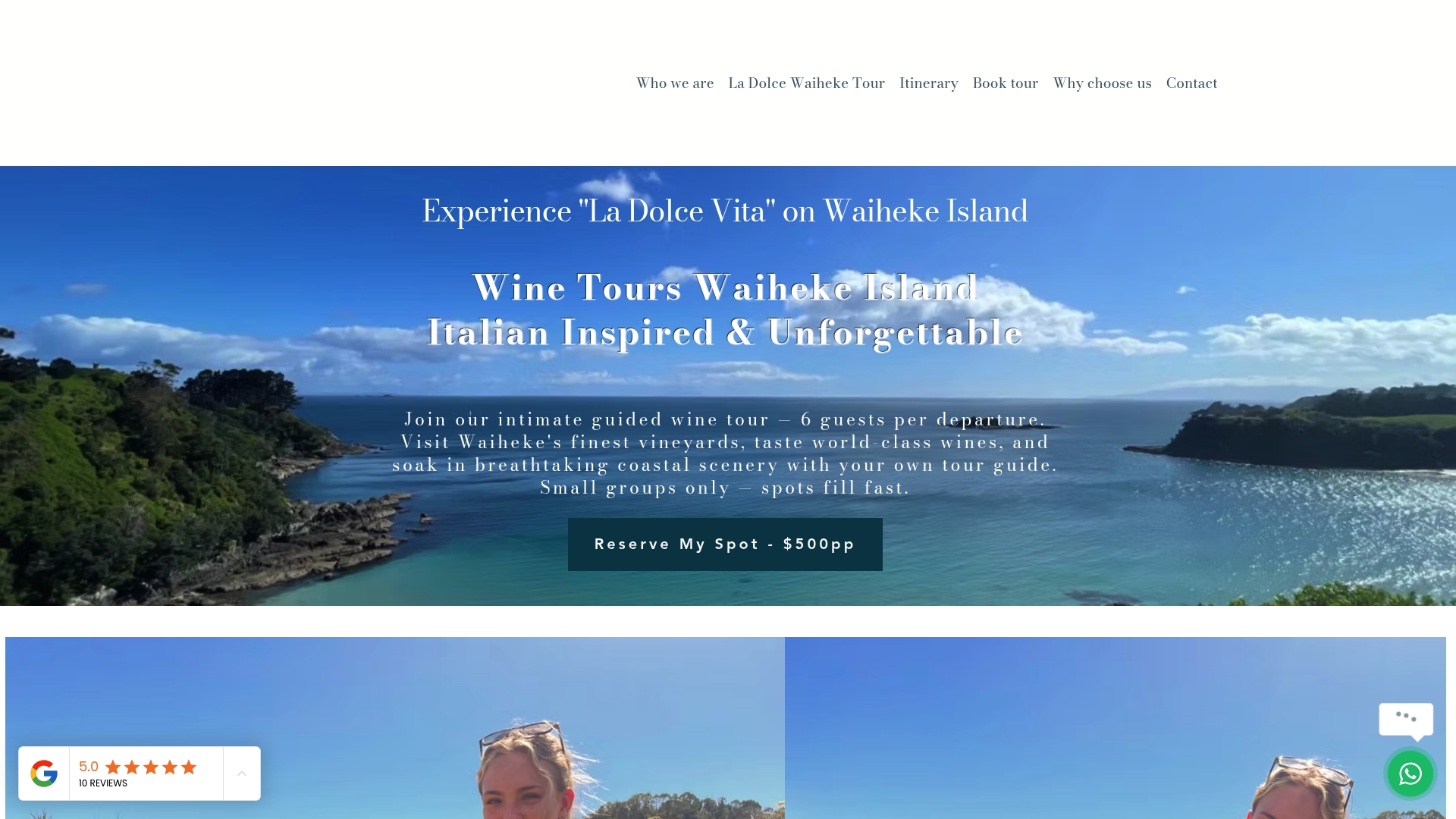
Booking includes guided tastings at boutique vineyards, gourmet local dining built around the day, and the option to add a private chef experience at your accommodation for something even more tailored. Transport is arranged as part of the package, so nobody on your team has to worry about logistics on the day itself. If you want to customize the experience for a specific group size or occasion, mention it when you book your tour, or check available dates and reserve online directly for a straightforward, no-guesswork way to lock in your date.
Sources
Recommended
Comments