
Waiheke Wine and Beach Day: The One-Day Itinerary That Works
- The Italian on Waiheke - Tours & Transfers

- 11 hours ago
- 12 min read
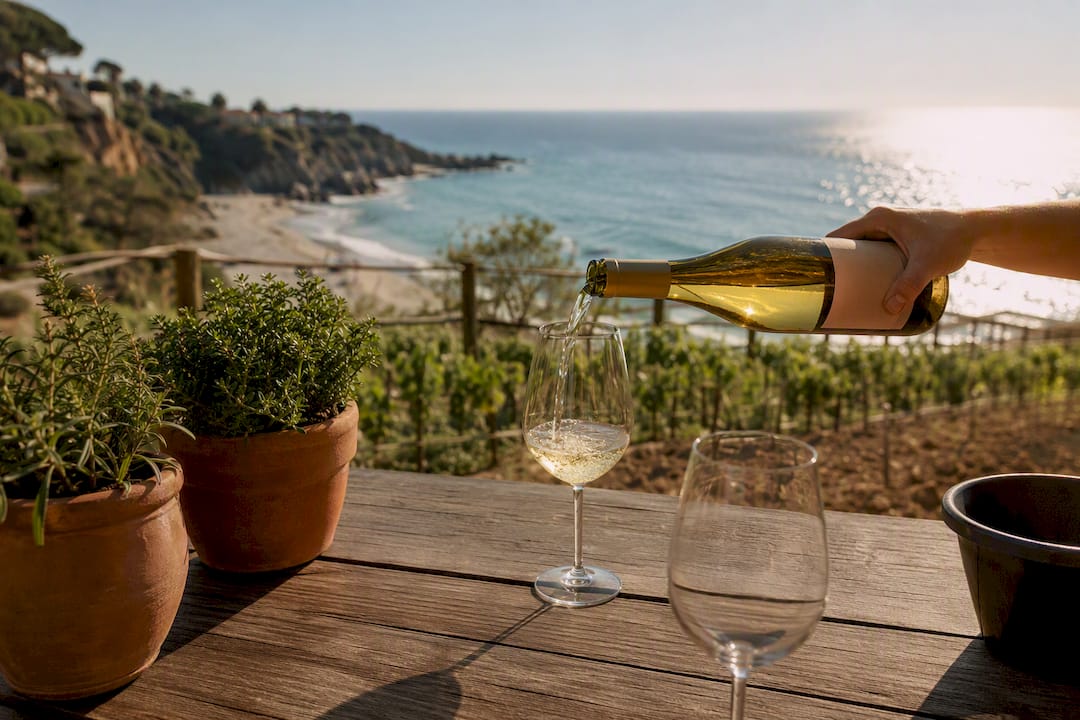
Yes, you can pull off a proper wine-and-beach day on Waiheke Island, and you don’t need to choose between the two. A full day, roughly 9am to 6pm, comfortably covers three cellar-door tastings plus a solid afternoon at the beach. The lowest-stress way to do it is a pre-booked small-group wine tour, like the ones run by Theitalianonwaiheke, that handles transport, tastings, and a vineyard lunch so nobody has to nominate a driver or chase bus timetables between stops.
If you’d rather plan it yourself, that works too, but you’ll trade some ease for flexibility. Here’s what to lock in before you leave the house:
Ferry: the passenger crossing to Matiatia takes about 40 minutes each way, and adult return fares run roughly NZ$46 to $62 depending on the operator and time of day.
Booking: reserve your ferry and any lunch spot ahead in summer, as this period tends to book out fast, especially on weekends.
Transport on the island: hop-on bus, e-bike, or guided pickup, but decide before you land, because taxis are limited and Ubers are scarce outside town.
Pro Tip: If your group has mixed drinking plans (some tasting, some driving, some just there for the beach), a guided tour with included transport removes the argument before it starts.
Key Takeaways
A full Waiheke day comfortably fits three cellar-door tastings and an afternoon beach stop, and a pre-booked small-group tour removes the transport and sober-driver problem entirely.
Point | Details |
Full day is realistic | Nine hours (9am–6pm) covers three tastings plus a proper beach stop without rushing. |
Ferry timing drives everything | The 40-minute crossing and NZ$46–62 return fare shape your departure and return windows. |
Costs scale by approach | Budget days run about NZ$120; guided tours run NZ$180–300; premium private days exceed NZ$400. |
Onetangi suits a final stop | Its length and beachside dining make it the least stressful place to end the day before the last ferry. |
Theitalianonwaiheke solves logistics | Small-group tours capped at six include transport, curated cellar doors, and lunch for a low-stress guided day. |
Table of Contents
Wine and Beach Day Waiheke: The Numbers You Need First
Before you book anything, get the baseline facts straight. Waiheke sits about 40 minutes offshore from downtown Auckland by passenger ferry, and that crossing alone shapes your whole day: leave too late and you’ll be racing the last sailing home before you’ve even ordered lunch.
The island has around 30 wineries, and roughly half run public cellar doors you can walk into without a reservation. Tasting flights typically cost between NZ$10 and $25 per person, and many vineyards credit that fee against a bottle purchase, so if you’re planning to buy wine anyway, the tasting is close to free.
Seasonally, February through April is the sweet spot: warm enough to swim, quiet enough that you won’t be fighting for a table at lunch. December through March also works well for swimming, but expect bigger crowds and pricier accommodation if you’re staying overnight.
Factor | Detail |
Ferry crossing time | About 40 minutes each way on the passenger ferry from downtown Auckland to Matiatia |
Adult return ferry fare | Roughly NZ$46 to $62 |
Public cellar doors | Roughly 15 of the island’s 30 wineries |
Typical tasting fee | NZ$10–25 per person, often credited against purchases |
Best months for wine + swim | February–April (warm, quieter); December–March (warmer, busier) |
Recommended day length | Full day, 9am to 6pm |
A few practical notes worth keeping in your back pocket:
Not every winery takes walk-ins during peak season, so call ahead or book a tasting slot if you have a specific cellar door in mind.
A full nine-hour day gives you enough room for three tastings, lunch, and a proper swim, without feeling rushed at any single stop.
Three Ready-Made Day Plans for Waiheke
You don’t need to build an itinerary from scratch. Pick the one that matches your budget and appetite for logistics, then adjust the details.
The budget day. Catch an early ferry (aim for 9am or earlier), buy a Western Explorer hop-on bus pass at Matiatia, and ride to Oneroa village. Do one tasting at a cellar door within walking distance of the bus loop, then head to Oneroa Beach for a swim and a cafe lunch in the village. This plan keeps costs down because you’re not paying for a guided tour, and you control your own pace. The trade-off is more waiting around for buses and less certainty about tasting availability if you haven’t called ahead.
The mid-range guided day. Book a small-group tour with morning pickup near the ferry terminal. A typical tour like this runs four to five hours, visits about three cellar doors, and includes a vineyard lunch, all for roughly NZ$180 to $260 per person. Your driver handles the roads, your guide handles the wine list, and you’re dropped at a beach (often Onetangi or Palm Beach) for the afternoon before the return ferry. This is the plan for anyone who wants three good wineries and zero logistics stress.
The beach-first relaxed day. Skip the early wine rush entirely. Take a mid-morning ferry, head straight to Oneroa Beach for a swim while the day is still cool, then wander into the village for a midday tasting or two. Linger over a long lunch, either at a vineyard restaurant or a beachside cafe, then make your way to Cable Bay for sunset drinks on the terrace before catching an evening ferry back.
Pro Tip: Whichever plan you choose, build in a 30-minute buffer before your return ferry. Waiheke’s roads are narrow and winding, and a “quick five-minute drive” often takes closer to fifteen once you factor in parking and foot traffic near Matiatia.
The mid-range guided option is worth a second look if this is your first trip. It solves the two biggest headaches of a DIY day: figuring out which of 30 wineries are actually worth your limited hours, and coordinating a driver who isn’t drinking. A bundled ferry-plus-bus-plus-lunch package exists as a middle ground too, useful if your group has different drinking plans and wants flexibility without full self-planning.
How Do You Get to Waiheke and Back?
The passenger ferry leaves from downtown Auckland’s waterfront and takes about 40 minutes to reach Matiatia, Waiheke’s main terminal. Multiple sailings run through the day, more frequently in summer, and the crossing itself is part of the experience: harbor views out, island silhouette in.
Timing your departure matters more than most first-time visitors realize.
Aim for a mid-morning departure, ideally before 10am, so you have full access to wineries that open around 11am without feeling rushed.
Avoid arriving after midday if you’re planning three tastings plus a beach stop. You’ll end up cutting one activity short.
Don’t plan around a single evening ferry as your only way home. If it’s cancelled or full, you’re stuck. Check the timetable for a backup sailing.
On ticketing, walk-up tickets are usually available outside peak season, but summer weekends and public holidays sell out standard sailings, especially early morning and late afternoon crossings. Book ahead if you’re traveling between December and March, or if your day depends on a specific pickup time for a guided tour.
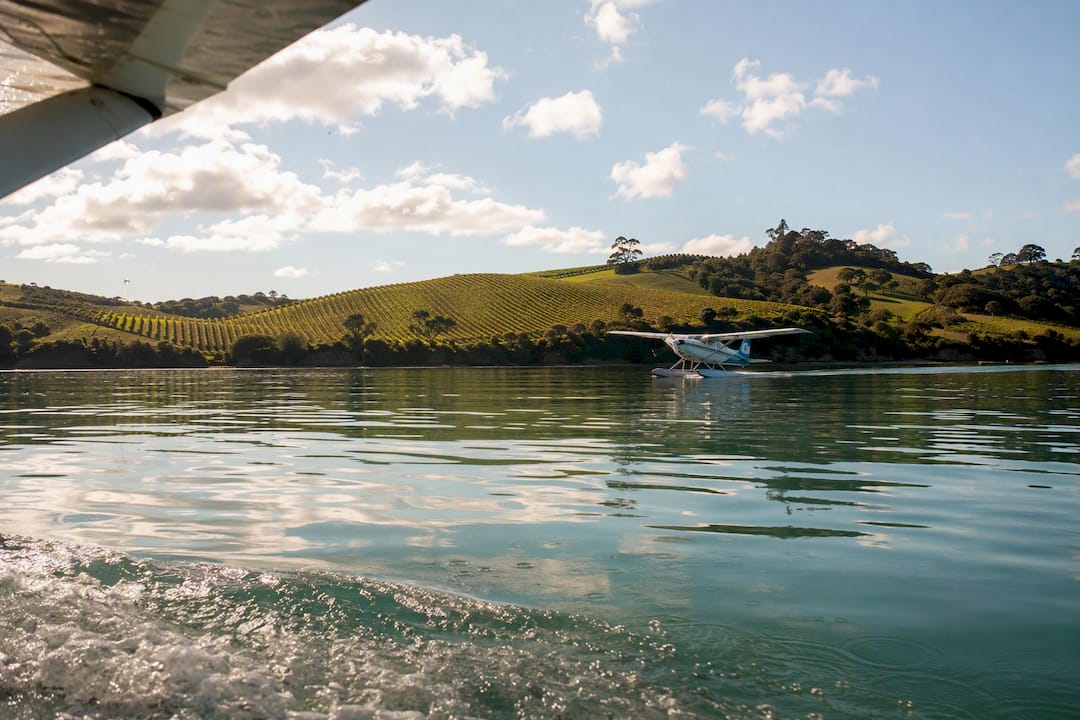
For those who want to skip the boat entirely, a seaplane or helicopter transfer from Auckland is available as a premium option. It cuts the trip to around 10 to 15 minutes in the air, but costs several times more than a ferry ticket and doesn’t leave you anywhere near Matiatia’s transport connections, so you’ll still need a plan for getting between wineries once you land.
Getting Around Waiheke Once You’ve Landed
Waiheke’s terrain is the reason most visitors don’t just walk between wineries. The island is hilly, roads wind along ridgelines, and distances that look short on a map often mean a 20-minute uphill walk in the sun.
The Western Explorer hop-on hop-off bus loops the island and meets incoming ferries at Matiatia, which makes it the default choice for day-trippers doing their own planning. It connects the main villages, several wineries, and the most popular beaches, and a day pass is cheap enough that it’s rarely worth skipping.
E-bikes are a genuinely fun alternative if your group is reasonably fit and wants more independence than the bus route allows, but the hills are real, and a full day of riding between three wineries plus a beach stop will tire out anyone not used to cycling.
Walking works for short hops within a village (Oneroa’s main street, for instance) but isn’t realistic for covering the island’s wider loop in a single day, especially once you’ve had a glass of wine or two.
Rental cars exist on the island, but driving after tastings carries the same legal and safety risk as anywhere else in New Zealand. If your day includes wine, plan around not being the one behind the wheel afterward.
This is exactly where a guided tour earns its cost. When transport is included, as it is on a small-group tour, nobody has to sit out the tastings to stay sober for the drive, and you’re not budgeting mental energy for bus timetables between stops.
Pro Tip: If you’re set on e-bikes, rent them at Matiatia first thing. Bike shops closer to the wineries often run low on stock by midmorning in peak season.
Which Wineries and Beaches Pair Well Together?
Matching the right winery cluster to the right beach saves you the one thing a day trip can’t afford to waste: time on the road. Waiheke’s geography naturally splits into a few workable pairings.
The Matiatia to Oneroa cluster is the easiest starting point for anyone on a tight schedule. You land at the ferry terminal, and within a short bus ride or e-bike hop you’re at a handful of cellar doors, then straight into Oneroa village for lunch and its beach for a swim. This is the cluster most first-time visitors default to, and for good reason: it minimizes transit and maximizes the number of tastings you can realistically fit before lunch.
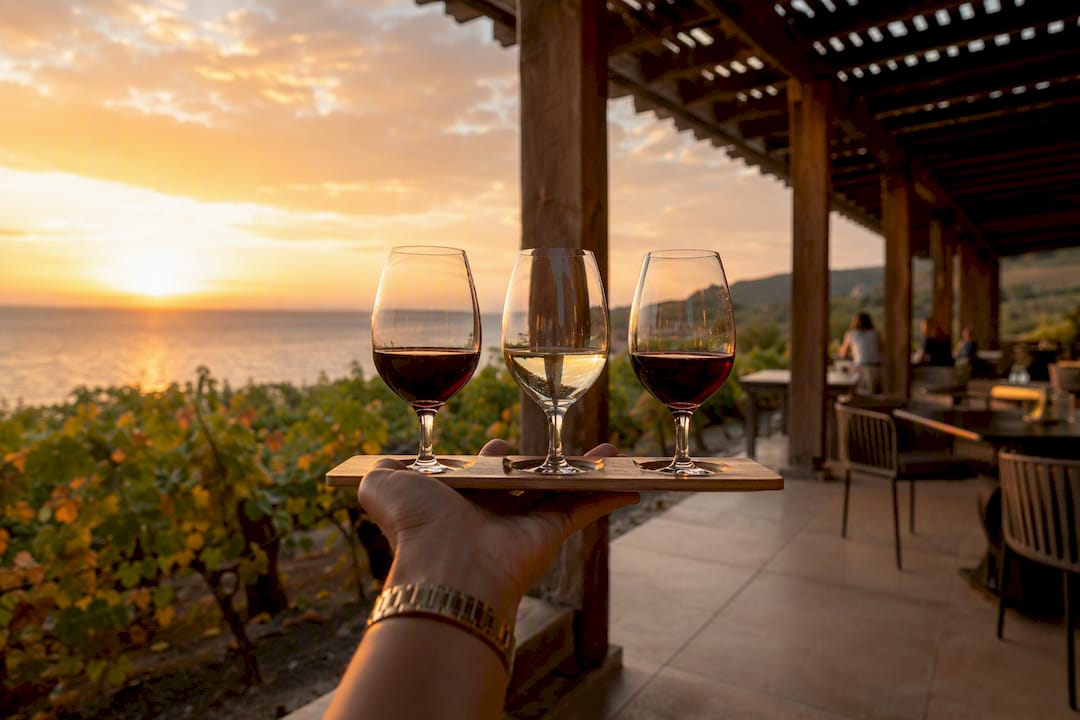
Further west, pairing a winery visit with Palm Beach or Cable Bay works well for anyone planning a long, unhurried afternoon. Cable Bay, in particular, has a terrace built for exactly this: tasting flight in hand, ocean view in front of you, sunset drinks as the natural closing act. Mudbrick sits nearby too, known for its gardens and views as much as its wine list, and pairs naturally with an afternoon at Palm Beach if you’re not in a rush to get anywhere else.
Heading east toward the Man O’War area offers a different experience entirely: more remote, picnic-style, and worth it if you’ve got a full day and don’t mind the extra travel time. It’s not the pairing for anyone trying to squeeze three tastings and a beach into a single afternoon, since the drive alone eats into your window.
For wineries with real reputations beyond their view, Stonyridge is the name most wine drinkers already know, its Larose blend having built a following well beyond the island. Tasting fees across these cellar doors typically sit in the NZ$10 to $25 range, and most operate from around 11am to 5pm, though hours shift seasonally, so a quick call ahead avoids a wasted trip.
On the beach side, Onetangi, Oneroa, and Palm Beach consistently rank as the island’s best for a combined swim-and-lunch stop. Onetangi is the longest stretch of sand on the island and works particularly well as a final destination, since it has dining right onto the beach and doesn’t force you into a rushed exit for the ferry.
If you’re building your own walking route between villages and coastline, Auckland Council’s track pages list official paths and access points worth checking before you set out on foot.
Self-Planned, Hop-On Bus, or Guided Tour: Which Fits Your Day?
There’s no single right answer here, but there is a fast way to figure out which setup fits your group. Weigh these five factors against each other before you book anything.
Convenience. How much do you want to think about logistics once you’re on the island?
Cost. Are you optimizing for the cheapest possible day, or willing to pay for less friction?
Number of tastings. Do you want to hit three specific wineries, or are you happy discovering one or two along the way?
Drinking safety. Does everyone in your group want to taste, or does someone need to stay sober to drive?
Local insight and dietary needs. Do you want a guide who knows which cellar doors are quiet on a Tuesday, and can they handle allergies or dietary restrictions at lunch?
Approach | Time required | Cost range | Effort | What’s included |
Self-planned (bus/e-bike) | Full day, more transit time | Ferry + bus pass + tasting fees, roughly NZ$100–150 | High: you plan every stop | Nothing bundled; you book each tasting and meal separately |
Small-group guided tour | 4–5 hours plus ferry | NZ$180–260 per person | Low: pickup, tastings, and lunch handled | Transport, three cellar doors, vineyard lunch |
Bundled bus-and-lunch package | Full day, flexible | Mid-range, ferry plus pass plus set lunch | Medium: some flexibility, less curation | Ferry, bus pass, set seasonal lunch |
A small-group guided tour suits couples, small groups of friends, and anyone visiting for the first time who wants three good wineries without spending half the day figuring out which ones are worth the detour. DIY options via the hop-on bus or e-bike give better value if you’re comfortable with more transit time and want to wander into whichever cellar door catches your eye.
Before booking any tour, check three things: what’s explicitly included (transport, number of tastings, lunch), the cancellation policy, and the maximum group size. A tour capped at six people delivers a very different experience than one that packs in twenty.
Why Theitalianonwaiheke Fits This Kind of Day
Theitalianonwaiheke runs small-group tours capped at six guests, built around the idea that a wine day works better when it feels like a shared afternoon with a knowledgeable local rather than a bus schedule with wine stops bolted on. The tours blend Italian culinary sensibility with New Zealand’s boutique vineyard culture, which shows up in the details: the pace, the food pairings, the way a guide talks about a winemaker’s story instead of just reciting tasting notes.
That structure maps directly onto the decision framework above:
Convenience: transport, tastings, and lunch are handled, so nobody in the group has to be the designated driver.
Local insight: guests get context on each vineyard’s history and winemaking approach that a self-guided cellar-door visit rarely offers.
Dietary needs: gourmet dining options can be adjusted ahead of time for allergies or preferences.
Group size: capped at six, which keeps the experience personal rather than herded.
The small-group format is what makes the difference between a tour that feels like a queue and one that feels like a genuine afternoon among boutique vineyards, gourmet food, and coastal views that don’t need a filter.
The curated vineyard visits built into these tours reflect boutique selections rather than the largest or most commercial cellar doors on the island, which tends to matter to guests who’ve done a big commercial tour elsewhere and found it impersonal.
What Does a Wine and Beach Day Actually Cost?
Your total spend depends almost entirely on which of the three itineraries you choose, and where you’re willing to trim.
If you’re trying to keep costs down without giving up the wine-and-beach combination entirely, three moves make the biggest difference. Travel off-peak (weekday, shoulder season) for cheaper ferry fares and quieter cellar doors. Pack a picnic for the beach instead of booking a sit-down vineyard lunch. And pick two tastings instead of three, since most people can’t tell the difference in enjoyment past the second cellar door anyway, especially once the beach is calling.
Remember that many tasting fees get credited against a bottle purchase, so if you’re planning to bring wine home, that NZ$10 to $25 flight often ends up costing you nothing extra.
What to Pack and Remember Before You Go
A few things separate a smooth Waiheke day from one where you’re improvising by 2pm.
Pack light but smart. Sun protection (hat, sunscreen, sunglasses), swimwear under your clothes, a light jumper for the ferry ride home once the sun drops, a reusable water bottle, photo ID, and a credit card for tastings and any bottle purchases.
Book ahead in summer. Reserve tastings and lunch spots if you’re traveling December through March, and arrive 15 to 30 minutes before any tour pickup time, since Matiatia gets busy and finding your guide in a crowd eats into your day.
Mind safety and etiquette. Never drive after tastings. Check lifeguard patrol seasons if you’re swimming at Oneroa or Onetangi, since patrols run seasonally rather than year round. Respect that some cellar doors are working farms and small family operations, not tourist attractions built for crowds.
Pro Tip: Finish your day at Onetangi rather than racing back to Matiatia early. Bring a reusable tote for any bottles you buy along the way; cellar doors don’t always supply bags, and a tote saves you from awkwardly carrying loose bottles onto the ferry.
A Final Note on What Makes This Day Work
The best Waiheke day I’ve seen described consistently ends at Onetangi, not because it’s the most photogenic beach on the island, though it might be, but because it removes the pressure of racing back to Matiatia for a last sailing. Local guides recommend it specifically for that reason: dinner on the sand, sunset without a clock running.
Small-group tours earn their cost here too. A guide who’s walked the same cellar doors dozens of times knows which winemaker will actually come out and talk to you, and which vineyard’s “cellar door experience” is really just a tasting room with a till. That kind of access rarely shows up on a self-planned itinerary, no matter how well you research it beforehand.
— Luca
Book Your Waiheke Wine and Beach Day
Theitalianonwaiheke is the alternative to piecing together buses, bookings, and a designated driver for your own wine and beach day. Every tour caps at six guests, includes transport between boutique vineyards, gourmet dining, and local insight you won’t get from a self-guided cellar-door hop, so your only job is showing up at the ferry with sunscreen and an appetite.
Tours typically run four to five hours, cover several curated cellar doors, and build in time for the coastal scenery that makes Waiheke worth the ferry ride in the first place. Dietary needs, allergies, and private-group requests can all be arranged ahead of your date, and a specialty food-and-wine tour is available for guests who want a more elevated pairing experience.
Ready to lock in a date? Head to Book Now to check availability, or use Book Online if you’d rather handle payment and details in one step. For tips on requesting dietary accommodations or arranging a private group, the booking guide walks through exactly what to ask for.
Sources
Recommended
Comments